What Is Boiler Maintenance and Annual Service in Toronto?
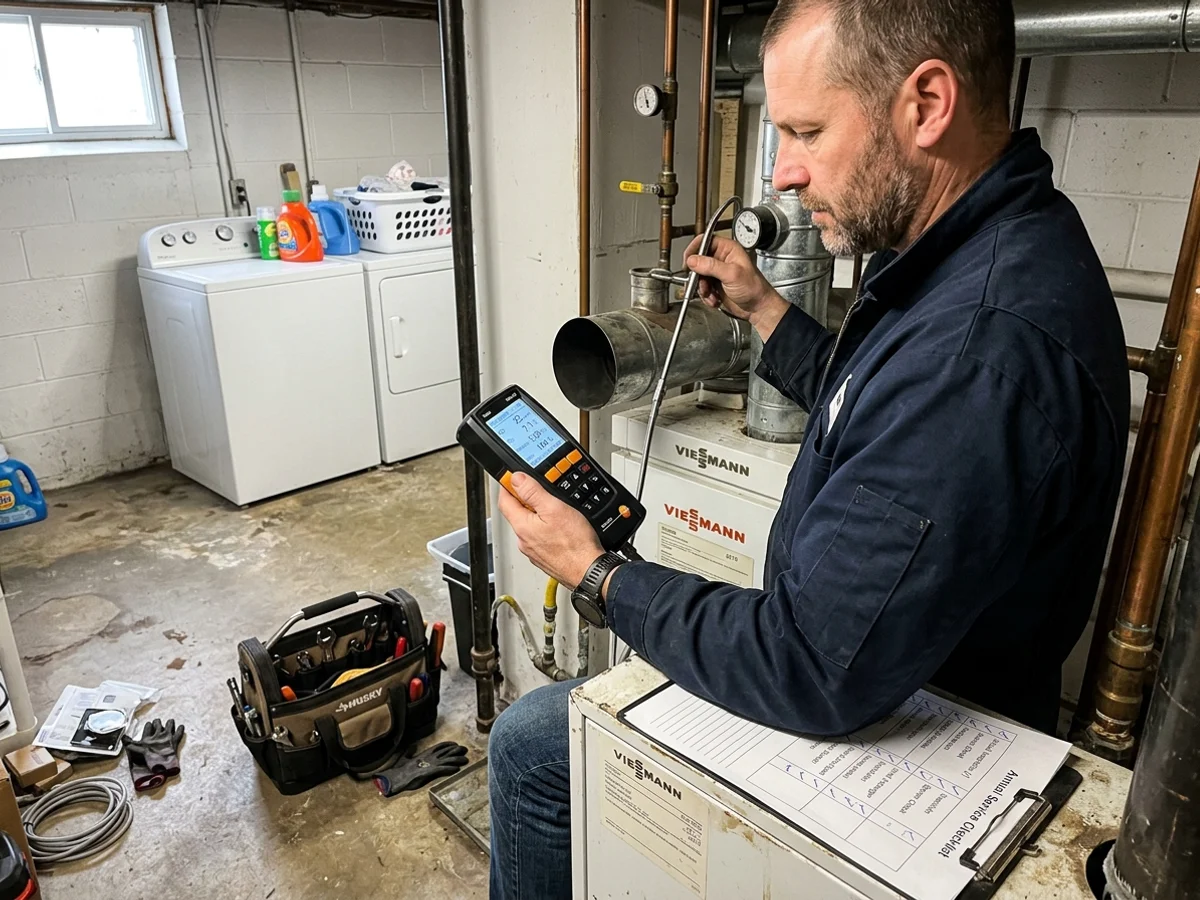
Boiler maintenance in Toronto is a 12-point annual tune-up priced at $199 to $349 CAD, and it is the cheapest useful thing a GTA homeowner can buy for their heating system. The visit covers digital combustion analysis, ignition component cleaning, heat exchanger washing, expansion tank pre-charge correction, a 30 PSI pressure relief valve test, water pH and glycol testing, venting inspection, condensate neutraliser replacement, and control verification. Every reading is written down.
The reason to book it is not a vague sense of preventive care. It is that annual servicing is a stated condition of most manufacturer parts warranties, and the written service report is the evidence a manufacturer asks for when a heat exchanger fails at year eight. Without that record, a $1,200 to $3,500 CAD warranty claim becomes a $1,200 to $3,500 CAD bill. Every technician on the visit holds a valid TSSA G1 or G2 gas certification, the same licensing standard behind our boiler installation work across Toronto.
The 12-Point Annual Boiler Tune-Up Checklist
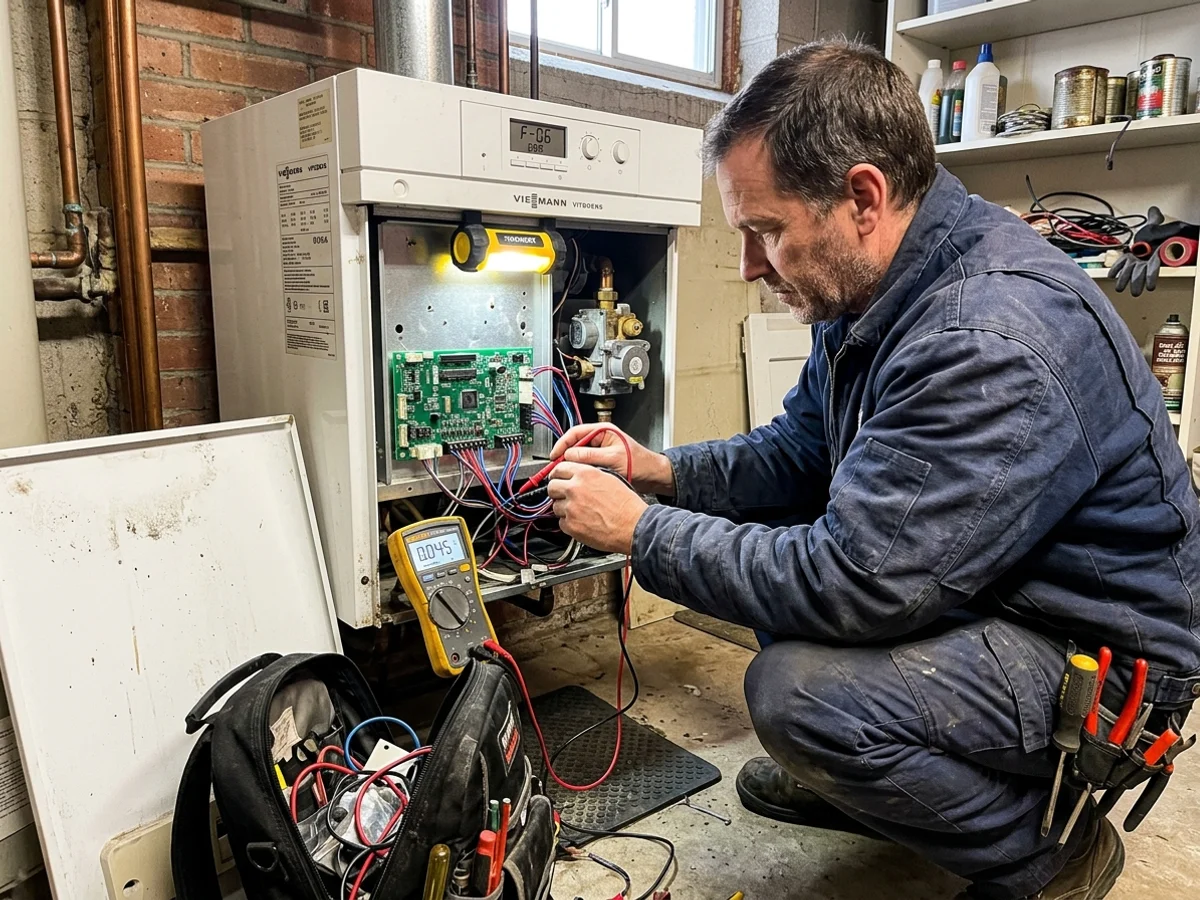
- Digital combustion analysis. CO, CO2 ratio, stack temperature, and excess air measured with a flue gas analyser. Readings taken before and after adjustment.
- Flame ionisation rod. Cleaned and its microamp signal tested. A weak signal is the most common cause of intermittent lockouts.
- Spark igniter electrode. Cleaned and gapped to the manufacturer specification.
- Heat exchanger inspection and wash. Fire side checked for soot and scaling, water side for corrosion, and washed where fouling is present.
- Burner seal and gasket. Inspected for leakage and deterioration, which affects combustion air and safety both.
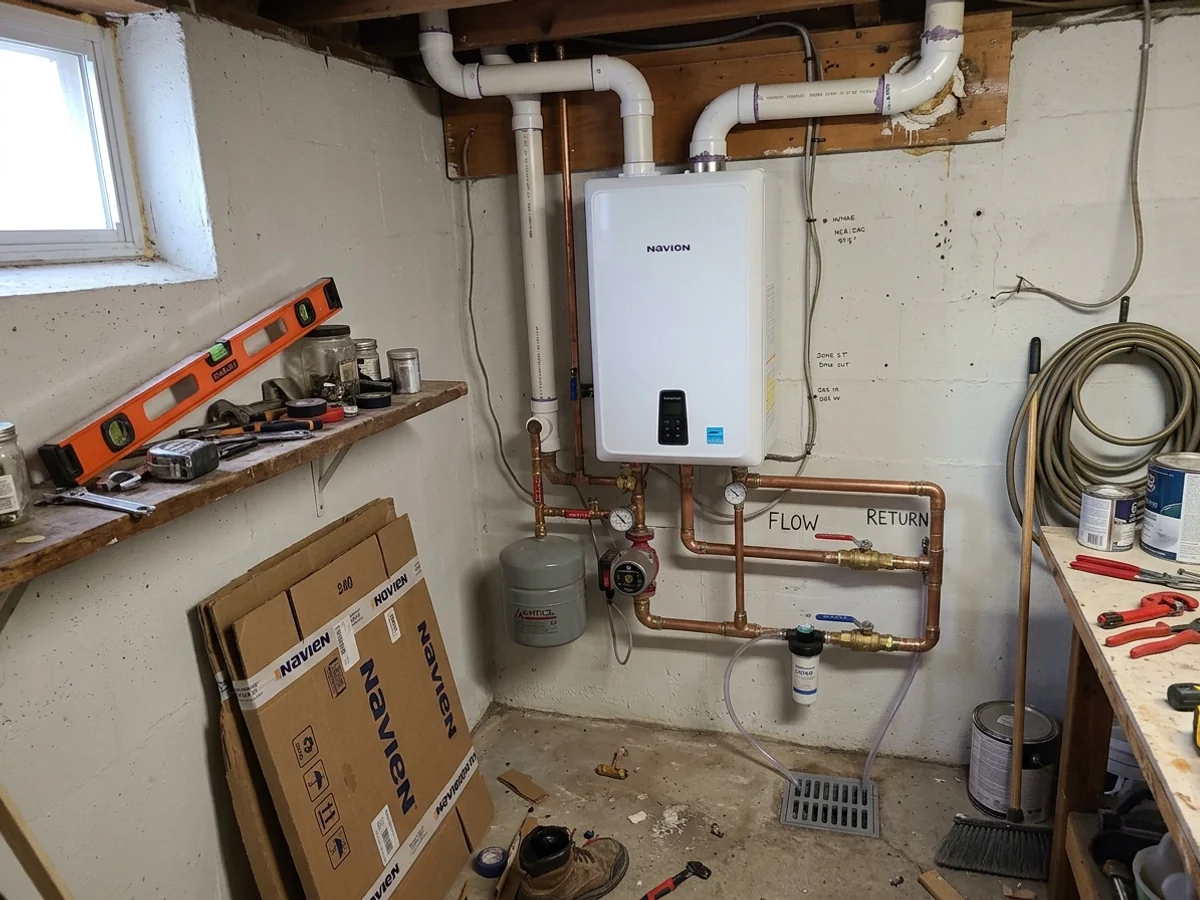
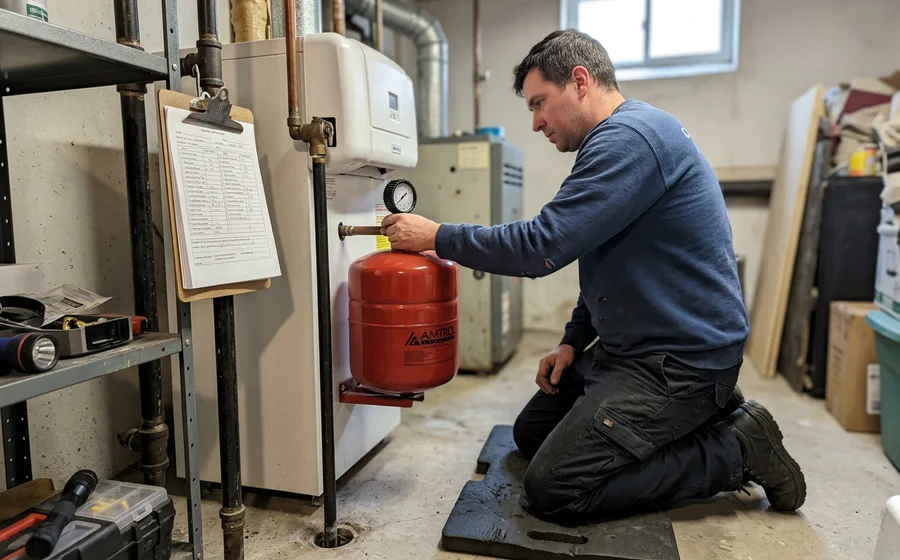
- Expansion tank pre-charge. Measured and corrected to match system fill pressure.
- Pressure relief valve. Tested at 30 PSI and inspected for weeping or mineral build-up on the seat.
- Circulator operation. Delta T checked across the pump, bearing noise assessed, and on multi-zone systems each loop verified individually.
- Water pH and glycol concentration. Tested to catch acidification and inhibitor depletion before they corrode ferrous components.
- Venting inspection. Checked for obstruction, corrosion, correct slope, and clearance to windows, meters, and property lines under B149.
- Condensate line and neutraliser. Line cleared, neutraliser cartridge media checked and replaced where exhausted.
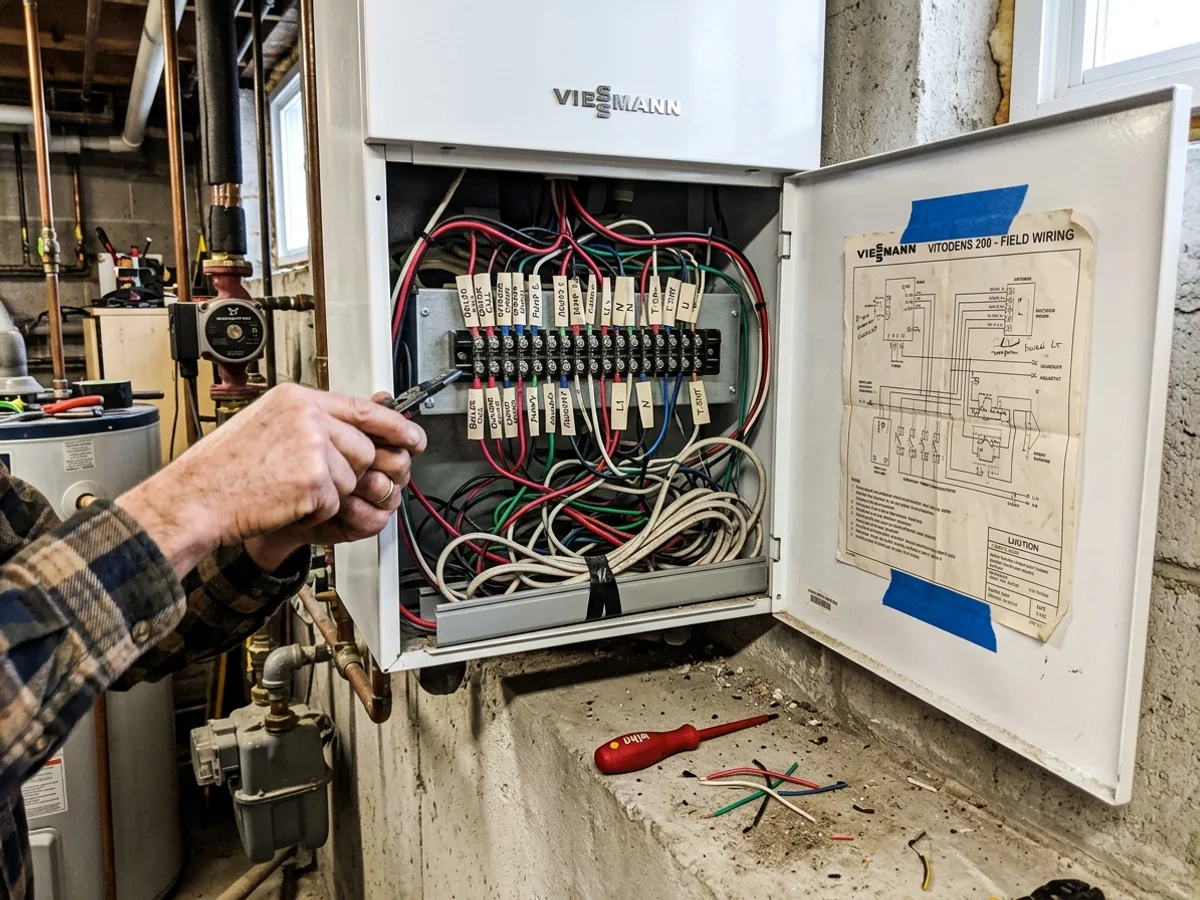
- Controls and aquastat. Setpoints, differentials, and the outdoor reset curve verified against how the house actually behaves.
How Much Does Boiler Maintenance Cost in Toronto?
| Service type | What it adds | CAD band |
|---|---|---|
| Standard boiler tune-up | Full 12-point inspection with written report | $199 - $249 |
| Combi tune-up with descaling | Flat-plate exchanger flush, DHW flow verified, mixing valve check | $249 - $299 |
| Multi-zone or radiant service | Per-loop circulator checks, delta T on every circuit, glycol testing | $299 - $349 |
There are no trip charges and no items discovered after the visit. If the inspection finds something needing a part, it is quoted against the published bands, $200 to $1,200 CAD for standard component repairs and $1,200 to $3,500 CAD for major repairs, and nothing is fitted without your authorisation.
Why Annual Service Pays for Itself
Three ways, in order of size.
Warranty protection. Most manufacturer parts warranties require documented annual servicing. A heat exchanger failure at year eight is a $1,200 to $3,500 CAD part. With a service record it is a warranty claim. Without one it is an invoice. That single consideration outweighs the cost of a decade of tune-ups.
Avoided emergency calls. A weeping relief valve, a low expansion tank pre-charge, or a fouling flame rod found in October costs very little to correct. The same three faults found in January present as a no-heat call at the $199 to $349 CAD after-hours diagnostic rate plus whatever the repair costs, and the house is cold while it happens.
Efficiency held. A boiler drifts. Gas valve settings move, heat exchangers foul, excess air creeps up. On a Toronto home burning $2,400 CAD of gas a year, holding rated efficiency instead of losing five to ten percent is worth $150 to $300 CAD annually. Modest on its own, meaningful across a twenty-year service life.
What Annual Service Cannot Fix
Being straight about the limits matters. Maintenance extends useful life and holds efficiency at whatever the unit is capable of. It cannot recover efficiency the design never had, and it cannot reverse age.
A well-maintained cast iron sectional can run forty years mechanically. It will still be running at 60 to 70 percent efficiency by year 25, because that is what happens to that design over time, not because it was neglected. When we service a unit past 25 years we include a written repair-versus-replace comparison alongside the service report, so the numbers are in your hands well before the decision becomes urgent on a cold night. That comparison is covered in full on Boiler Replacement Toronto.
Combi Systems Need One Extra Thing
GTA water is hard, and the flat-plate heat exchanger inside a combi is the most scale-sensitive component in the house. Its passages are narrow by design because narrow passages transfer heat well, and that same geometry is where calcium deposits first. The symptom homeowners report is that hot water pressure has faded over two or three winters.
On a combi service we flush that exchanger through the descaling service valves, verify domestic hot water flow rate at the tap rather than at the unit, and check the thermostatic mixing valve setpoint. Done annually it keeps flow at the original rate. Skipped for five years it ends in an exchanger fouled past recovery, which is a replacement rather than a flush.
What Actually Stops Toronto Homeowners From Booking Annual Service
“It is $199 to $349 CAD for basically nothing, the boiler already works” is the objection we hear on nearly every first-time call. The point of the visit is what it prevents rather than what it fixes on the day. A weeping relief valve or a low expansion tank pre-charge found in October costs a few hundred dollars to correct, and the same fault found in January is a no-heat call at the after-hours diagnostic rate plus the repair. Annual servicing is also a stated condition of most manufacturer parts warranties, so the visit is what keeps a future heat exchanger claim a warranty claim instead of a bill.
“I will notice if something is wrong” is the second, and it is usually false. A boiler drifts in efficiency gradually. Gas valve settings move, heat exchangers foul, excess air creeps up, and none of it presents as a symptom you would notice from upstairs. The only way to see it is a digital combustion analysis, which is why every visit measures before and after rather than relying on how the boiler sounds or feels.
“How do I know the technician is not just running through a checklist” is the third. Every reading, before and after, goes into a written service report along with the technician’s TSSA certificate number, so the record exists independent of anyone’s word, including ours.
How Our Toronto Boiler Service Process Works
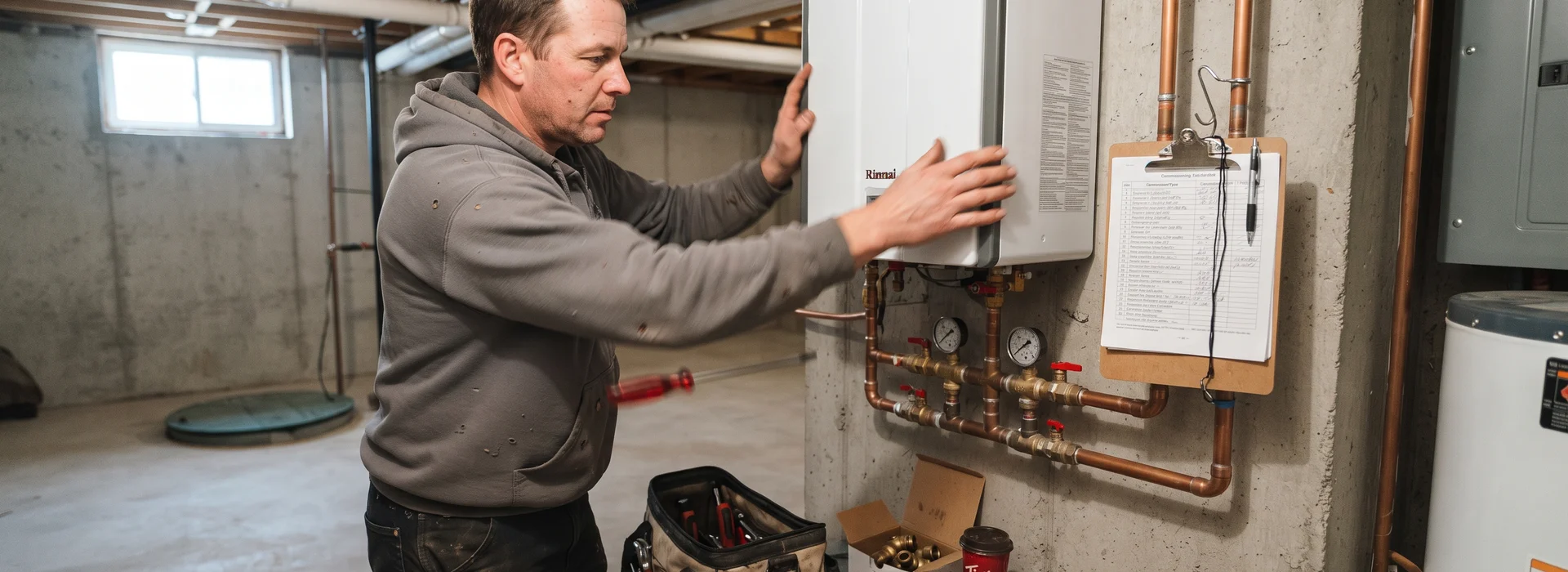
Booking before the season, scheduled between August and November so faults surface before the first cold snap. Baseline readings taken, with system pressure, supply and return temperatures, and existing combustion figures recorded before anything is adjusted. The 12-point inspection worked through in order. Clean, adjust and correct, with the heat exchanger washed, flame rod and electrode cleaned and gapped, pre-charge corrected, and the condensate neutraliser replaced where needed. Post-service combustion analysis so the improvement is measured rather than assumed. Written report and warranty record issued with all readings, any flagged items with CAD figures, and the documentation your manufacturer will ask for.
If the boiler has already failed rather than needing a tune-up, see Boiler Repair Toronto for the published repair bands, or Emergency Boiler Repair Toronto if the house is cold right now.