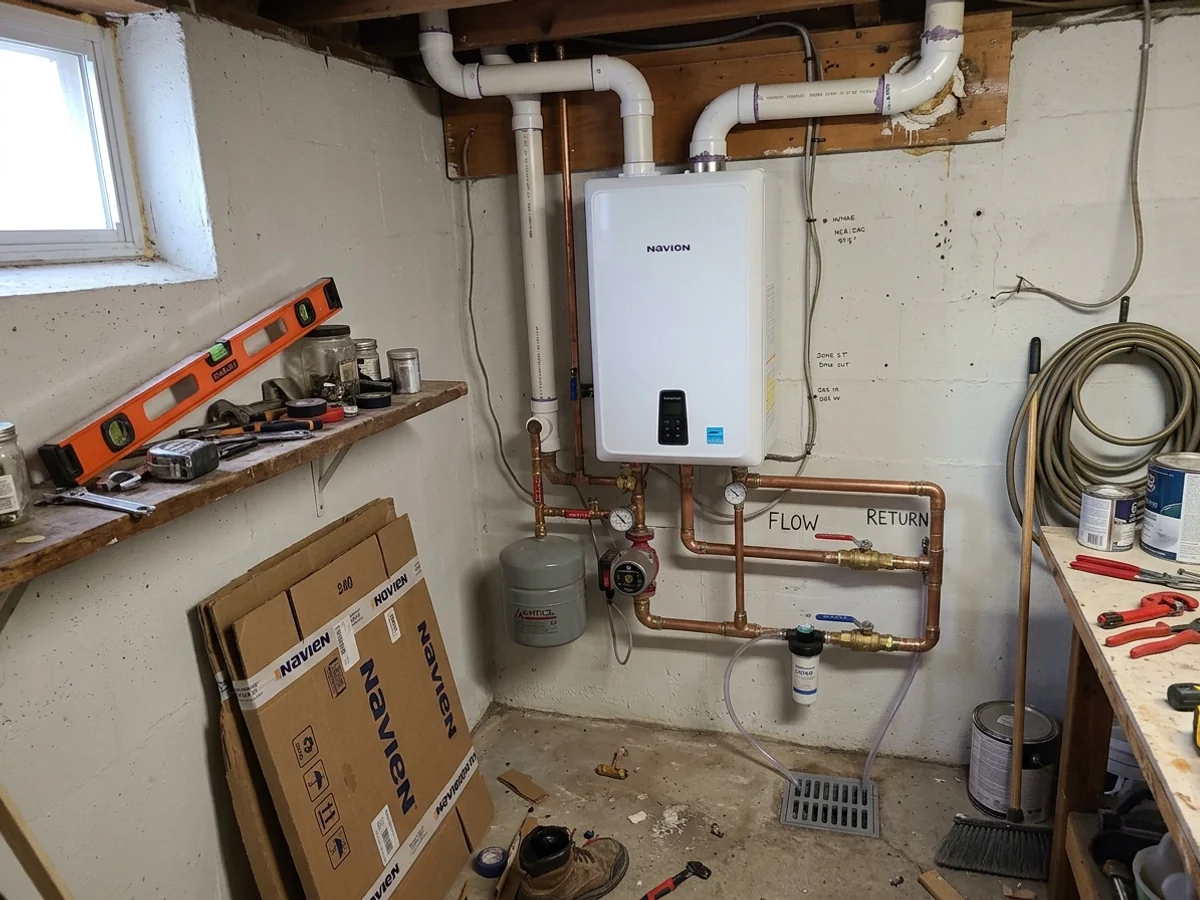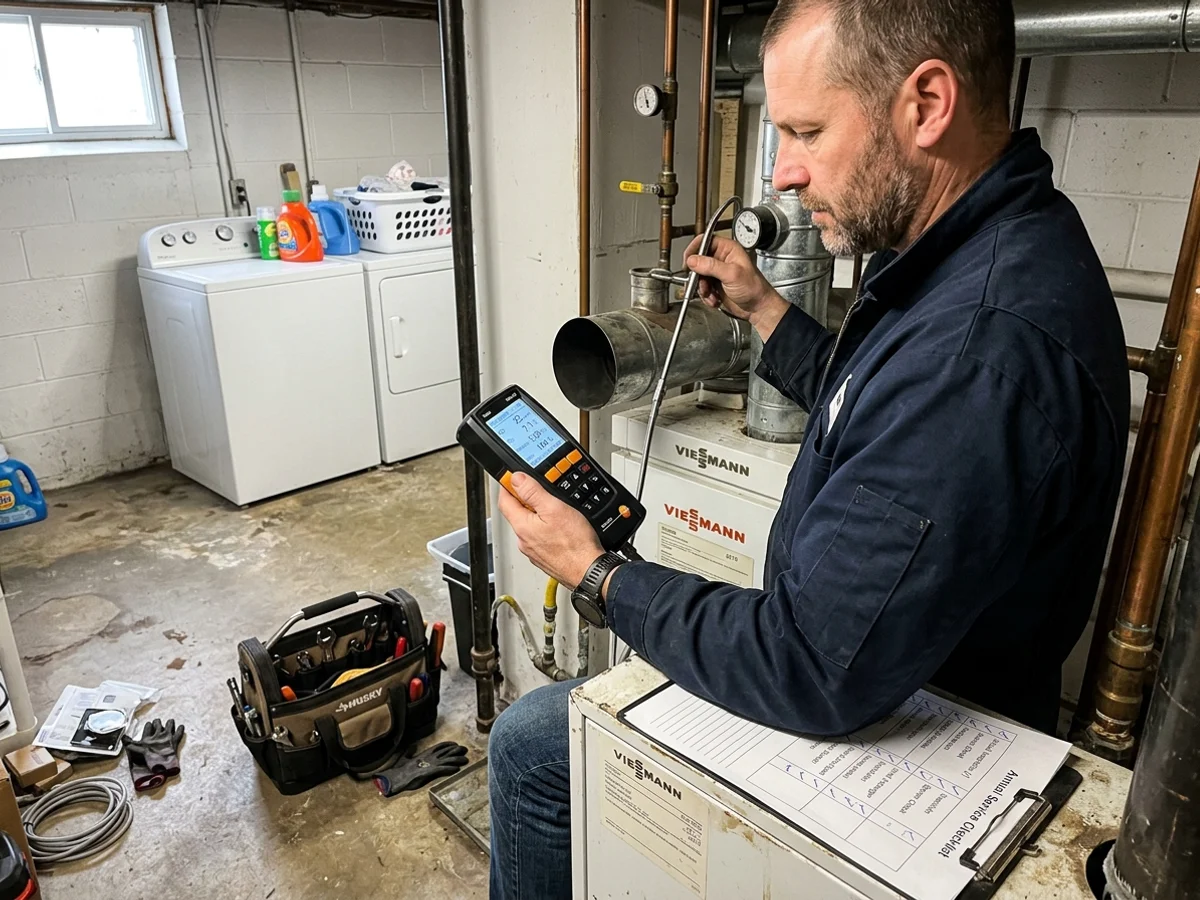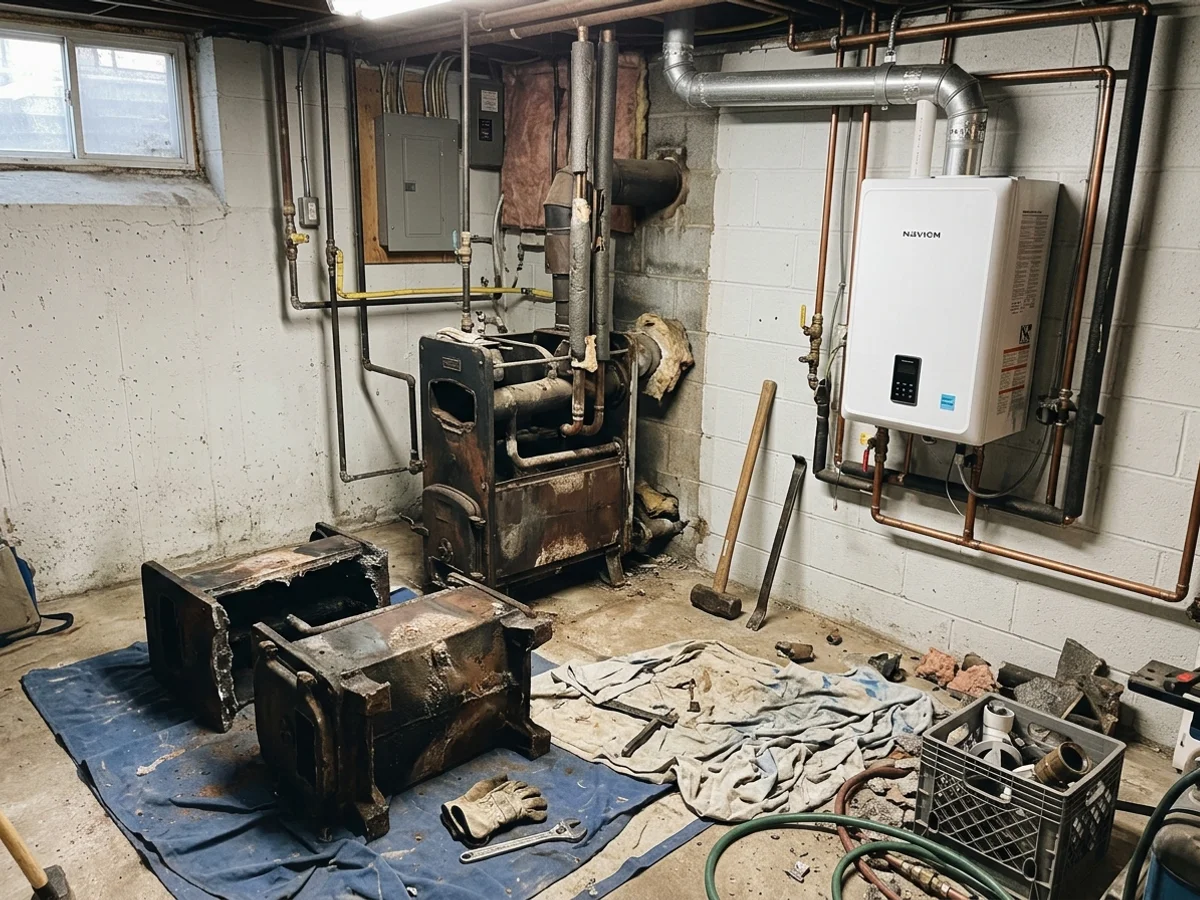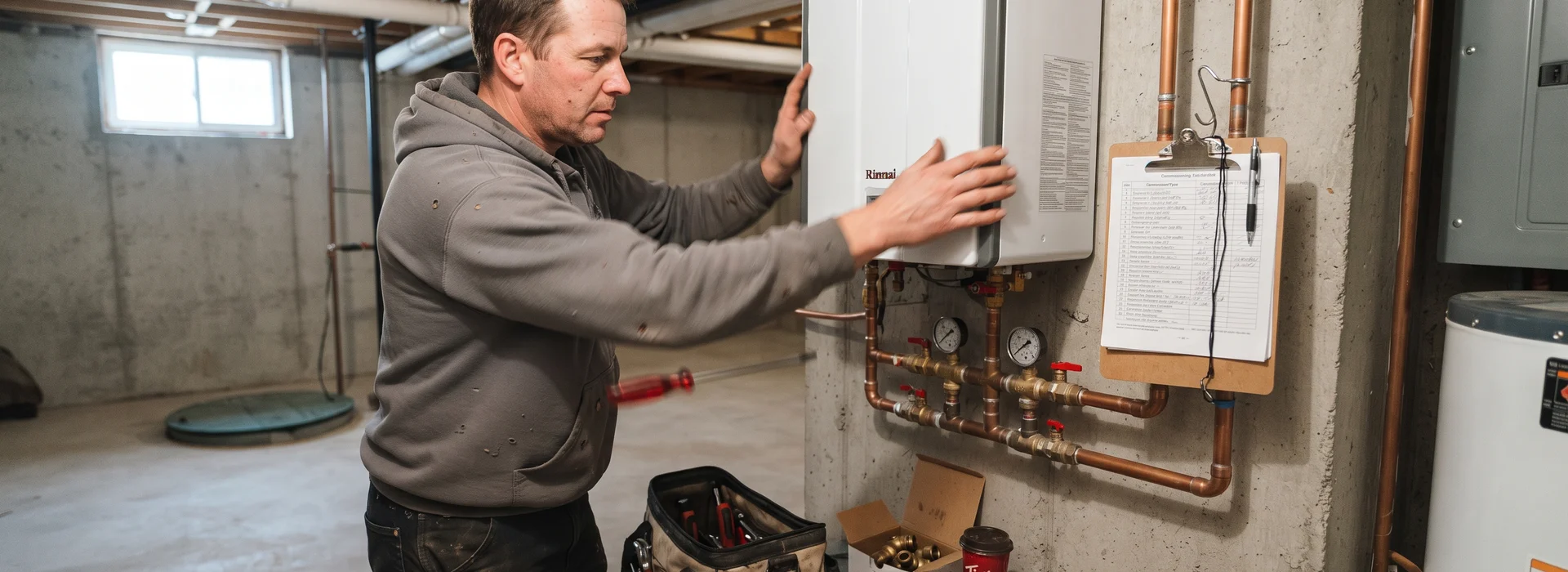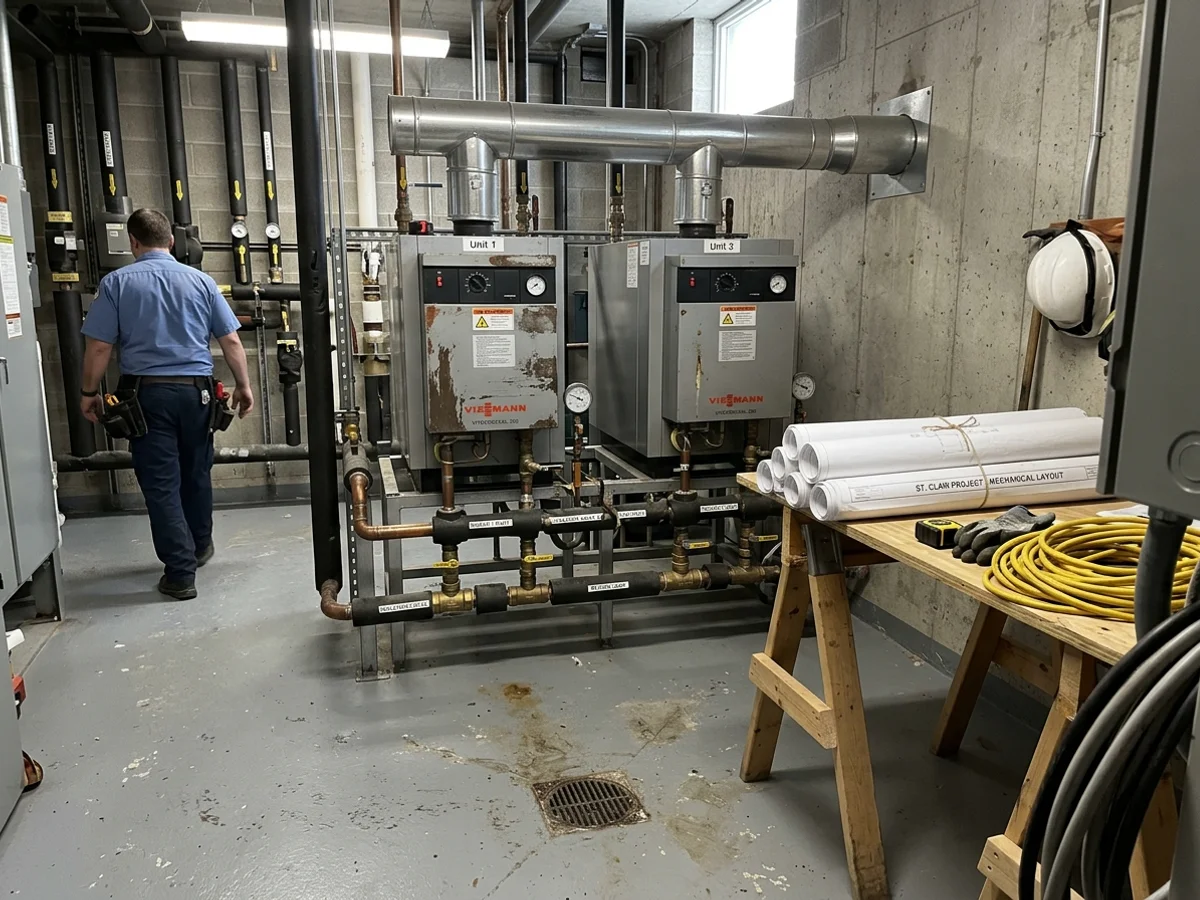
What Is Commercial Boiler Installation in Toronto?
Commercial boiler installation in Toronto runs $8,500 to $18,000 CAD and covers rooftop penthouse and basement mechanical room plant for retail plazas, restaurants, offices under 25,000 square feet, and mid-rise condo buildings. The work is separated from residential by three things: the BTU class, the code path, and the consequences of downtime. Inputs above 400,000 BTU require TSSA licensing at that class. Pressure vessels fall under CSA B51 and the Ontario Boiler and Pressure Vessel Safety Act, which brings design registration, data plates, and relief device sizing into scope. And a plant failure in a tenanted building is a lease problem, not an inconvenience.
Those three factors shape how we quote. Every commercial job starts with a site survey covering plant room or roof access, existing BTU input, vent configuration, gas service capacity, and the building’s operating schedule. The operating window is agreed before the quote is issued, because on a retail plaza or a restaurant the cost of the wrong shutdown window exceeds the cost of the boiler.
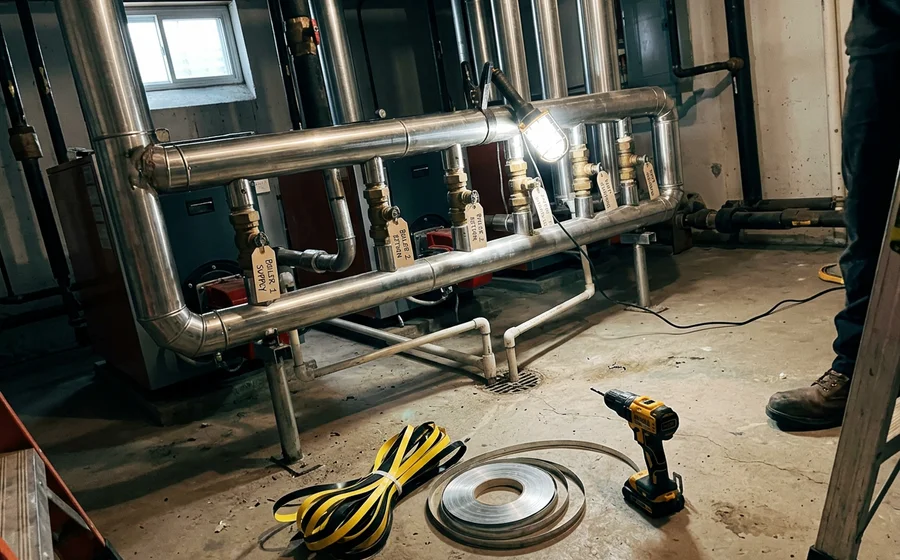
5 Signs Your Commercial Rooftop Boiler Is Ready to Fail
- Nuisance lockouts that clear on a reset. A control or flame-sensing fault that returns within days is a progressing failure, not a glitch. On rooftop plant the exposure accelerates it.
- Gas consumption rising against degree-day data. Comparing year over year consumption to heating degree days removes the weather variable. If consumption climbs while degree days hold steady, efficiency is degrading.
- Visible corrosion on the heat exchanger or gas train. Rooftop equipment lives outdoors. Corrosion on the gas train in particular is a safety item, not a cosmetic one.
- Widening supply to return temperature spread at steady load. A growing delta T at constant load points at circulation problems or a fouling heat exchanger.
- Parts becoming difficult to source. On plant older than fifteen years this quietly becomes the deciding factor. A two-week part lead time in January is not a risk most buildings can carry.
How Much Does Commercial Boiler Installation Cost in Toronto?
| Scope | What drives the price | CAD band |
|---|---|---|
| Single unit, basement mechanical room | Accessible plant room, existing vent route usable | $8,500 - $12,000 |
| Rooftop penthouse installation | Rigging, curb work, weatherised gas train, glycol charge | $12,000 - $15,000 |
| Multi-boiler cascade with BAS | Common venting header, lead-lag staging, BACnet integration | $15,000 - $18,000 |
Rigging is the line item that surprises most operators. Getting a commercial boiler onto a roof is a crane lift or a stair-tower carry depending on the building, and it has to be scheduled with the property manager and often with the city if a street lane is affected. It appears on the quote in Canadian dollars alongside the equipment, the venting, the controls, the permits, and the commissioning.
Why We Cascade Instead of Oversizing
The instinct on commercial plant is to install one large boiler sized for design day. Two smaller units staged lead-lag is almost always the better answer, for two reasons.
Redundancy. A single large boiler at a fault takes the entire building’s heat with it. In a mid-rise residential building in January that becomes an emergency within hours. A cascade keeps roughly half the capacity running while the faulted unit is repaired.
Turn-down range. A building operates at design load for a handful of days a year and spends the rest of the season well below it. A cascade of two units each with a 5 to 1 turn-down gives an effective 10 to 1 range across the plant, holding the boilers in their efficient modulating band instead of short-cycling a single oversized unit through a mild March afternoon. Short cycling wears ignition components, wastes gas, and is the most common reason a commercial plant fails to hit its predicted efficiency.
Lead-lag rotation then equalises run hours so the two units age at the same rate rather than one wearing out first.
Code, Compliance and the Paperwork That Comes With It
Commercial work carries a documentation trail, and it is worth knowing what should exist when the job is finished.
- TSSA permit for the correct BTU class, with the permit number recorded on the completed work.
- CSA B51 documentation covering design registration, the data plate, and relief device sizing for the pressure vessel.
- ASME Section IV stamp where the equipment class requires it.
- Ontario Building Code Part 6 mechanical review for the installation.
- ASHRAE 90.1 compliance on controls, meaning modulating operation, outdoor reset, and setback rather than a fixed-temperature aquastat.
- Commissioning record with combustion readings for each boiler in the cascade and proof of staging.
- BAS point map listing the BACnet or Modbus points exposed to the building automation system.
If your existing plant has been red-tagged or has failed a TSSA inspection, clearing it is standard emergency work for us. See Emergency Boiler Repair Toronto for the after-hours dispatch detail.
What Actually Stops Facility Managers From Approving the Replacement
“We can get another season out of it” is the most common delay on commercial plant, and the risk calculation is different than at home. A residential boiler failure is a cold house. A commercial failure in a tenanted building is a lease problem, and on plant already showing nuisance lockouts or rising gas consumption against degree-day data, the failure tends to arrive on the coldest week of the year rather than on a convenient Tuesday.
“The rigging and shutdown planning make this feel like it will disrupt the business” is the second. That is exactly why every commercial quote follows a site survey, and the operating window is agreed before the quote is issued rather than after, with work staged around tenant hours, loading dock access, and building management approvals rather than improvised on install day.
“How do we know the paperwork will actually hold up to an inspection” is the third. CSA B51 documentation, the TSSA permit for the correct BTU class, and the ASME Section IV stamp where it applies are handled as part of the job, not as an afterthought, and the operating and maintenance package handed over at commissioning is the same file an insurer or a TSSA inspector will ask to see.
How Our Commercial Installation Process Works
Site survey covering access, existing input, vent configuration, gas service capacity, and building schedule. Load calculation and plant design setting boiler count, staging strategy, and redundancy requirement. Written CAD quote itemising equipment, rigging, venting, controls, permits, and commissioning, with the operating window agreed. Permits and code review covering the TSSA permit for the BTU class, CSA B51 documentation, and Ontario Building Code Part 6 mechanical review. Installation and commissioning including rigging, gas train, common venting header, condensate neutralisation, combustion analysis on each unit, and cascade staging proved under load. BAS integration and handover with BACnet points mapped, lead-lag rotation set, inspection met, and the operating and maintenance documentation issued alongside the written workmanship warranty.
Ongoing, the plant needs a documented annual service. Boiler Maintenance and Annual Service Toronto covers the 12-point inspection, and on commercial plant the log is as valuable as the work itself for insurance and for the Ontario Boiler and Pressure Vessel Safety Act file. The same TSSA-licensed crew handles our residential boiler installation work in Toronto, so a mixed-portfolio owner deals with one contractor across both.