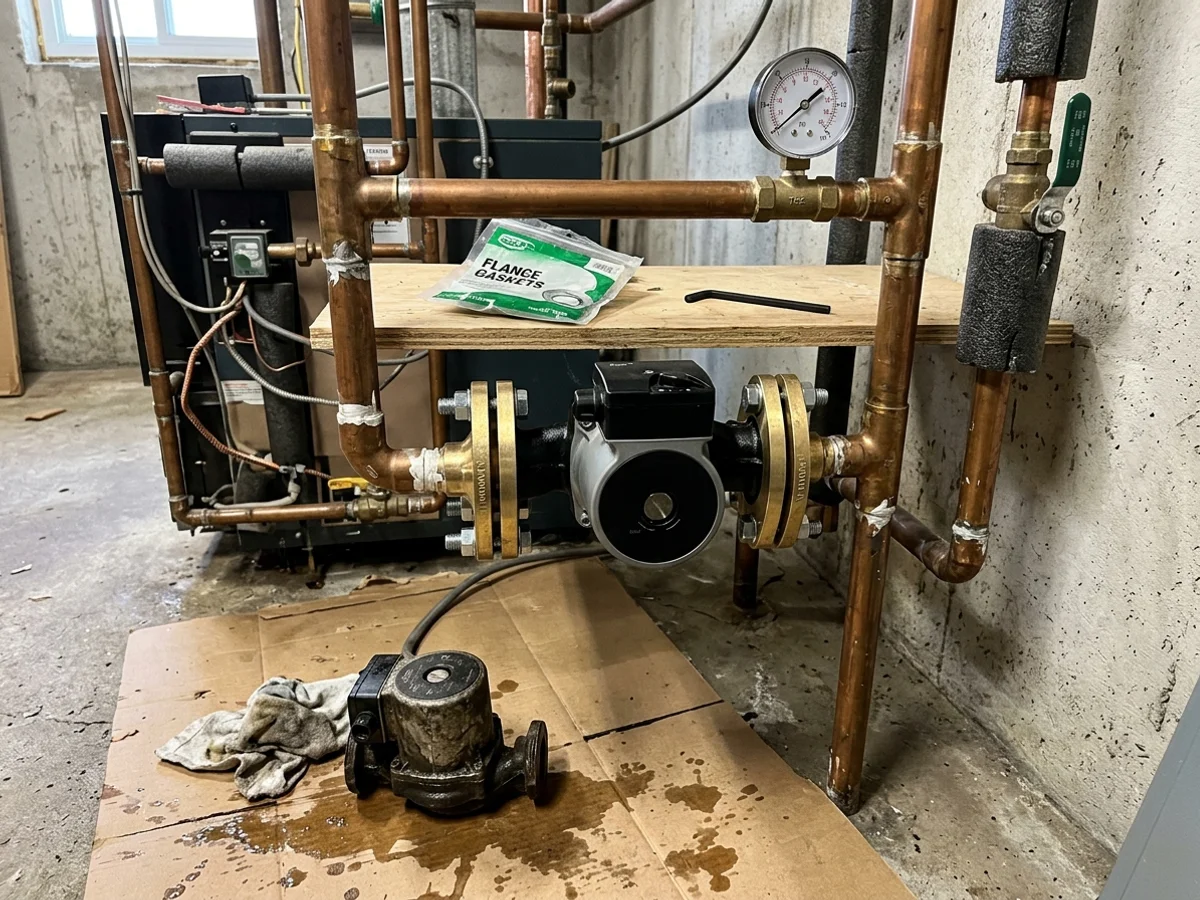
What Is Boiler Circulator Pump Replacement in Toronto?
Boiler circulator pump replacement in Toronto runs $450 to $1,200 CAD including the pump, labour, system purge, and rebalance. The circulator is the component that moves heated water from the boiler out to the radiators, baseboard, or radiant loops and back again. Without it the boiler fires, the supply pipe near the unit gets hot, and nothing else in the house does.
Circulators are among the more straightforward hydronic repairs, and also among the most frequently misdiagnosed. A running pump moving no water and an air-locked loop look identical from the thermostat. The diagnostic that separates them takes minutes and costs $99 to $249 CAD, waived when you authorise the replacement on the same visit. Replacing a healthy pump because the system was air-locked is a common and entirely avoidable expense.
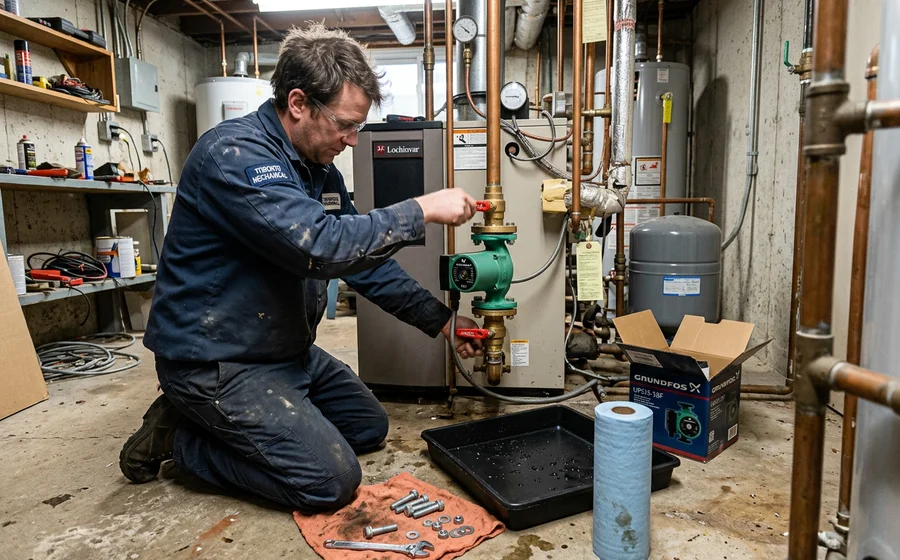
5 Signs Your Boiler Circulator Pump Is Failing
- Grinding, humming, or rattling from the pump body. Bearing wear or a scored shaft. It rarely improves and usually gets louder over a few weeks before the pump stops entirely.
- The boiler fires but the radiators stay cold. Supply pipe hot at the boiler, everything downstream cold. Either a seized impeller or an air lock, and the diagnostic distinguishes them.
- One zone cold, others normal. On a multi-circulator system this isolates the fault to the pump serving that zone, or to its zone valve actuator.
- Weeping at the flange gaskets or the shaft seal. Small at first, and often mistaken for a boiler leak.
- Pump body unusually hot to the touch. The motor is drawing hard against an impeller that is seizing. This is the stage where replacement becomes urgent rather than planned.
How Much Does Circulator Replacement Cost in Toronto?
| Option | What it includes | CAD band |
|---|---|---|
| Cartridge replacement | New cartridge in sound existing housing, partial purge | $450 - $650 |
| Full circulator replacement | Complete pump, new gaskets and flanges, re-sized to the loop, full purge | $650 - $950 |
| Variable speed ECM upgrade | ECM circulator, curve set to system, zone synchronisation checked | $950 - $1,200 |
The band includes labour, the system purge, and the delta T verification afterwards. It is not a parts price with the real work quoted separately. On a multi-zone system with more than one circulator, each pump is quoted individually, and it is worth asking whether all of them should be replaced at once given they are usually the same age.
Why Sizing Matters on a Replacement
The instinct is to read the label on the old pump and fit the same thing. That repeats whatever sizing error was made last time, and on Toronto systems modified across decades, oversized circulators are extremely common.
Sizing comes from two numbers. Head is the resistance the pump must overcome, determined by loop length, pipe diameter, fittings, and emitter count. Flow is the volume it must move to deliver the design temperature drop, typically 20F between supply and return. Both are calculated from the actual system rather than inherited.
An oversized circulator pushes water through too quickly, which produces velocity noise in the pipework, reduces the temperature drop across emitters, and over years can erode fittings at elbows. An undersized one starves the far end of the loop, which shows up as the back bedroom never getting warm. Neither is obvious from the outside, which is why the calculation is worth the few minutes it takes.
When an ECM Upgrade Is Worth the Difference
A conventional circulator runs at fixed speed whenever it is energised. A variable-speed ECM circulator, using an electronically commutated motor, varies its output to match demand.
On a system with zone valves that matters a great deal. As zones open and close, the flow requirement changes constantly, and a fixed-speed pump responds by pushing harder against a more restricted loop, producing noise and wasting energy. An ECM unit reads the pressure differential and throttles back.
The numbers: electrical draw drops 60 to 80 percent, which on a circulator energised for most of the heating season is a measurable hydro saving. Noise drops substantially, which matters when the mechanical room sits under a bedroom. And on multi-zone systems the constant-pressure curve eliminates the velocity noise that appears when only one small zone is calling.
At $950 to $1,200 CAD against $650 to $950 CAD for a conventional replacement, the difference usually pays back inside the pump’s service life. On a single-zone system with a simple loop, the conventional pump is often the better value, and we will say so.
Why Circulators Seize, and How to Stop It Happening Again
Most seized circulators are killed by magnetite sludge, the black iron oxide that forms when oxygen enters a system containing ferrous components. It settles on the impeller and in the bearing clearance until the shaft can no longer turn.
Three things let oxygen in. Non-barrier PEX used in a system with cast iron radiators or steel boiler sections, which is a design error that shows up years later. A persistent small leak somewhere in the loop, drawing in fresh oxygenated make-up water on every top-up. Or system water that has gone acidic and is actively corroding the metal it touches.
Replacing the pump without addressing the cause produces the same failure again in a few years. That is why annual water pH and glycol testing, part of the 12-point annual service, is worth more than it looks, and why persistent pressure loss should be diagnosed rather than topped up. See Boiler Repair Toronto for the pressure fault diagnosis.
What Actually Stops Toronto Homeowners From Booking a Pump Replacement
“Maybe it will just start working again” is the most common delay, and it is worth being direct: a circulator that has started grinding or seizing does not self-correct. Left running, a failing pump either stops moving water entirely or keeps drawing current against a seizing impeller, which is the stage where a $450 to $650 CAD cartridge swap can turn into a motor failure and a longer wait for parts.
“I do not know if it is the pump or just an air lock” is the second, and it is a fair question because they present identically from upstairs: the boiler runs, the house stays cold. The diagnostic settles it in minutes by checking electrical supply, impeller rotation, and delta T across the pump, rather than replacing a healthy pump on a guess.
“Is the ECM upgrade a real saving or just an upsell” is the third. At $950 to $1,200 CAD against $650 to $950 CAD for a conventional replacement, we only recommend it where the system has zone valves creating a variable flow requirement, since that is where the 60 to 80 percent electrical draw reduction actually applies. On a single-zone system with a simple loop, we say so and quote the conventional pump instead.
How Our Pump Replacement Process Works
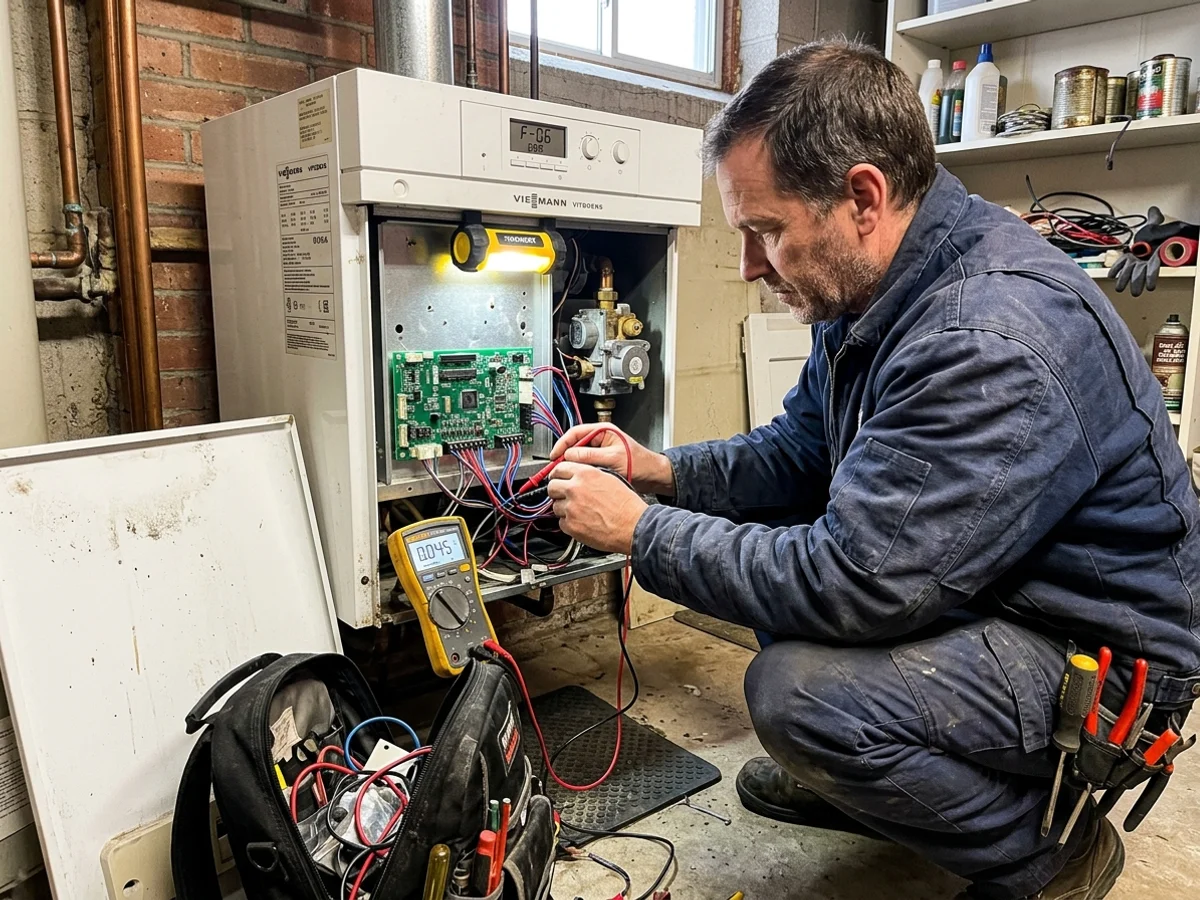
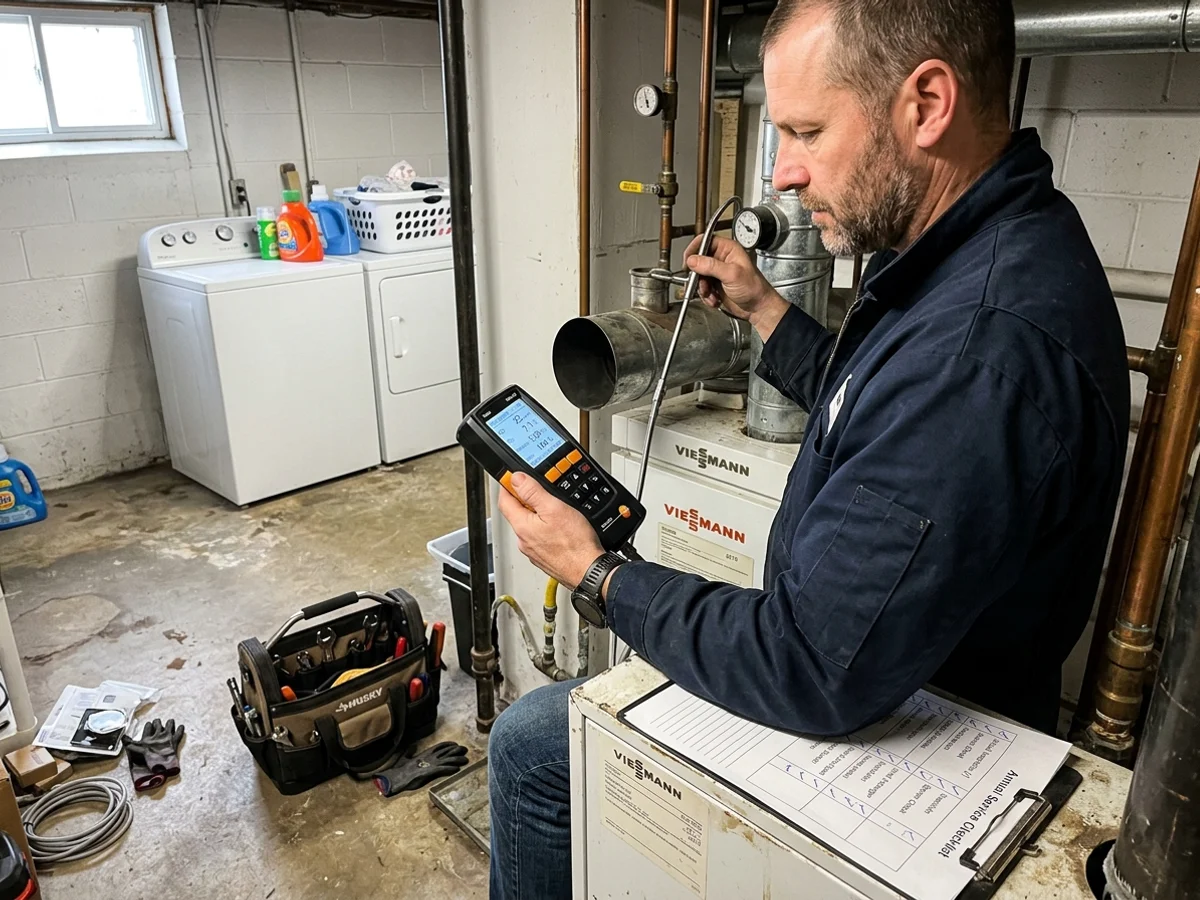
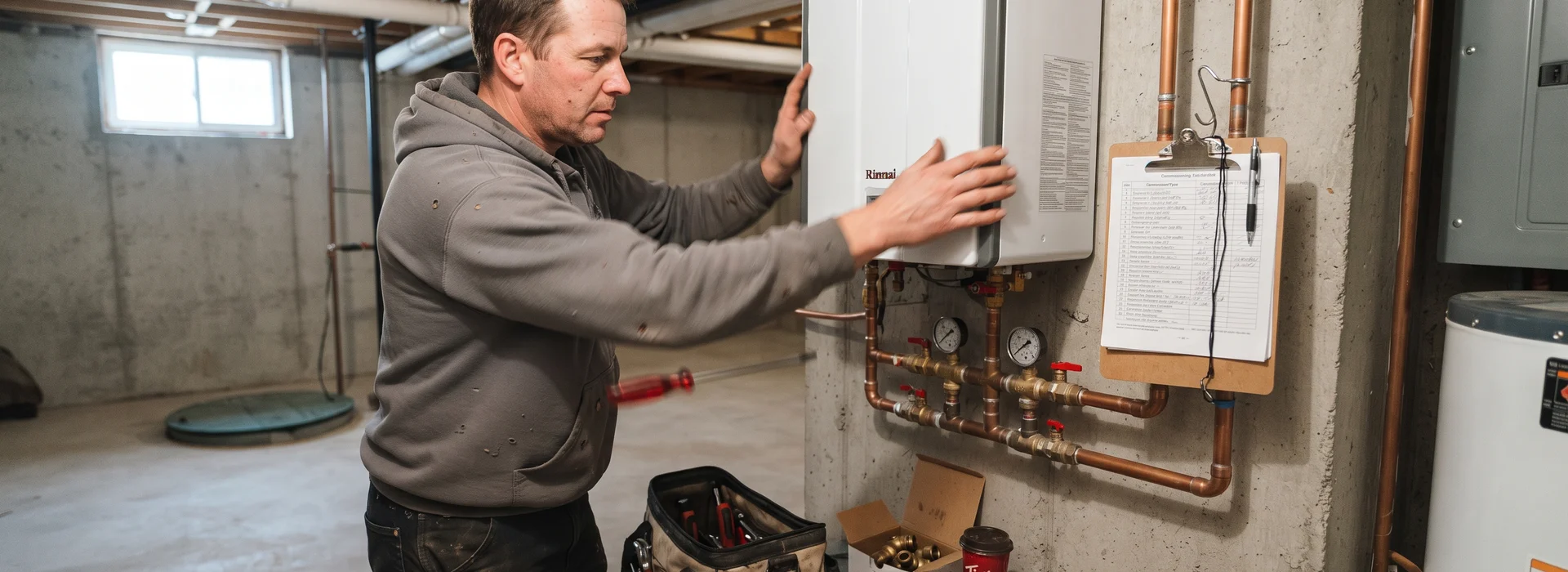
Fault confirmation first, checking electrical supply, impeller rotation, and delta T across the pump so a seized circulator is not confused with an air lock. Head and flow sizing from loop length, pipe size, and emitter count rather than from the old pump’s label. Written CAD quote covering cartridge, full replacement, and ECM upgrade options before any part is fitted. Isolate and replace, closing the isolation flanges so only the pump section drains and fitting the new unit with fresh gaskets and correct shaft orientation. Purge and rebalance, clearing air from the system, restoring pressure, and verifying delta T across the loop so the new pump is demonstrably moving what it should. Report and warranty with the readings, the pump model and curve setting, and the written workmanship warranty.
Where isolation flanges were never fitted originally, we add them during the replacement so future service does not require draining the system.
A circulator is a small part of a larger system. Our boiler installation and repair services in Toronto cover the rest of it, each with a published CAD band.