What Is Boiler Replacement in Toronto?
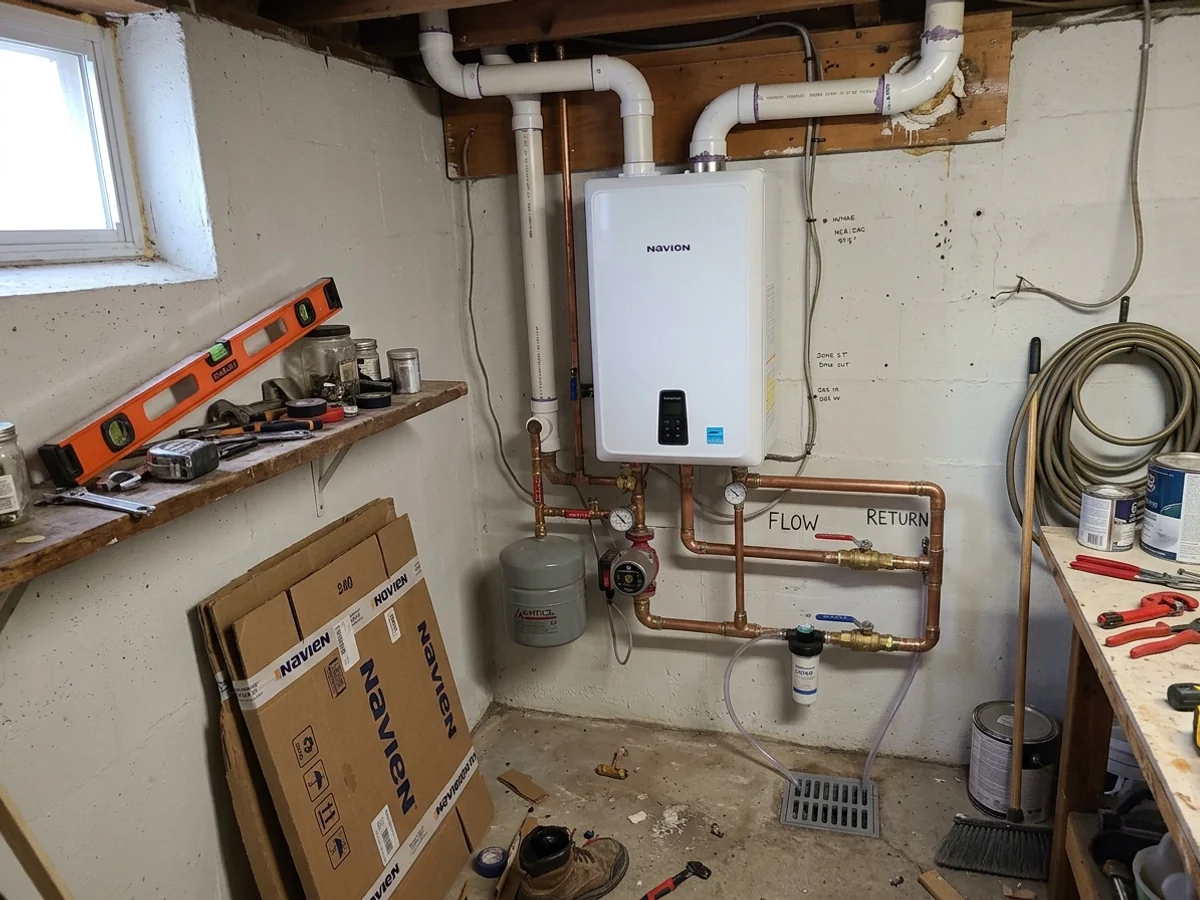
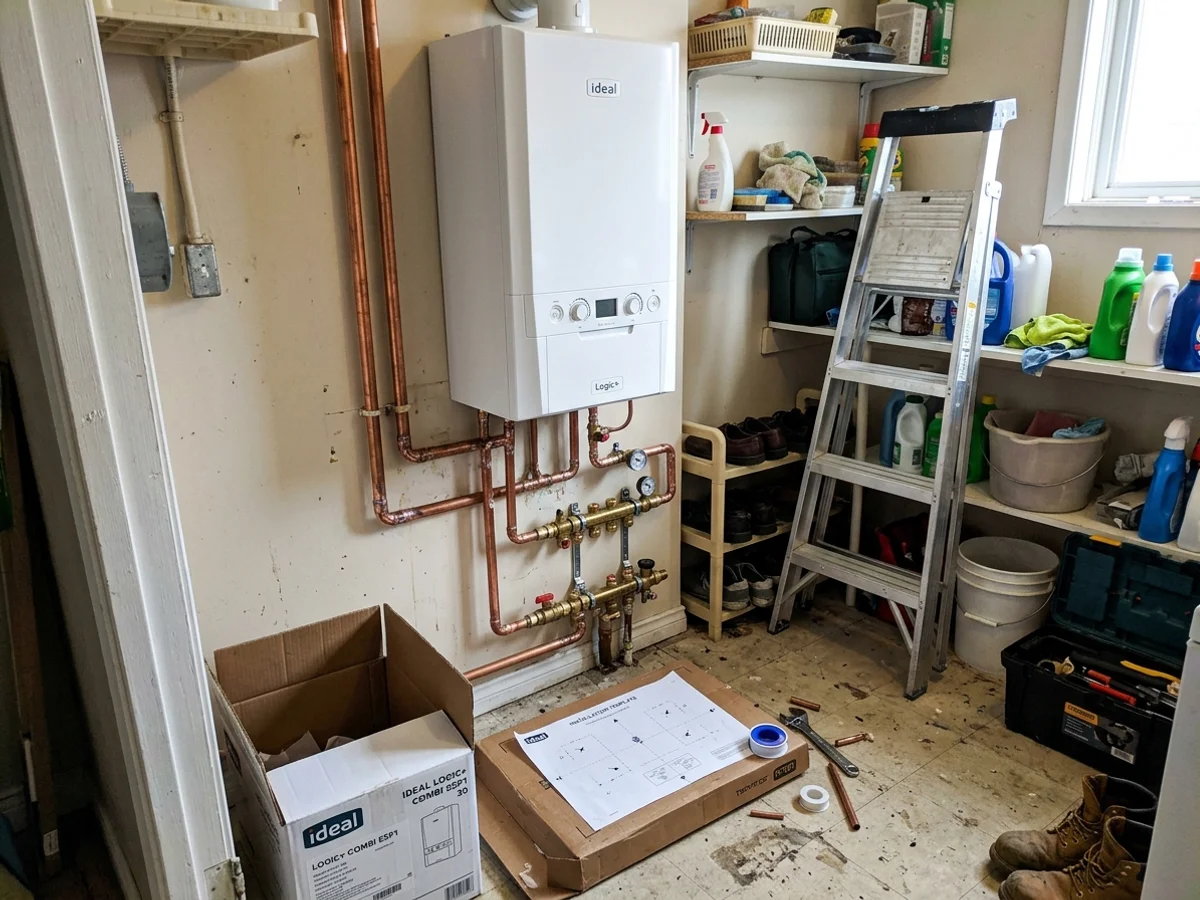
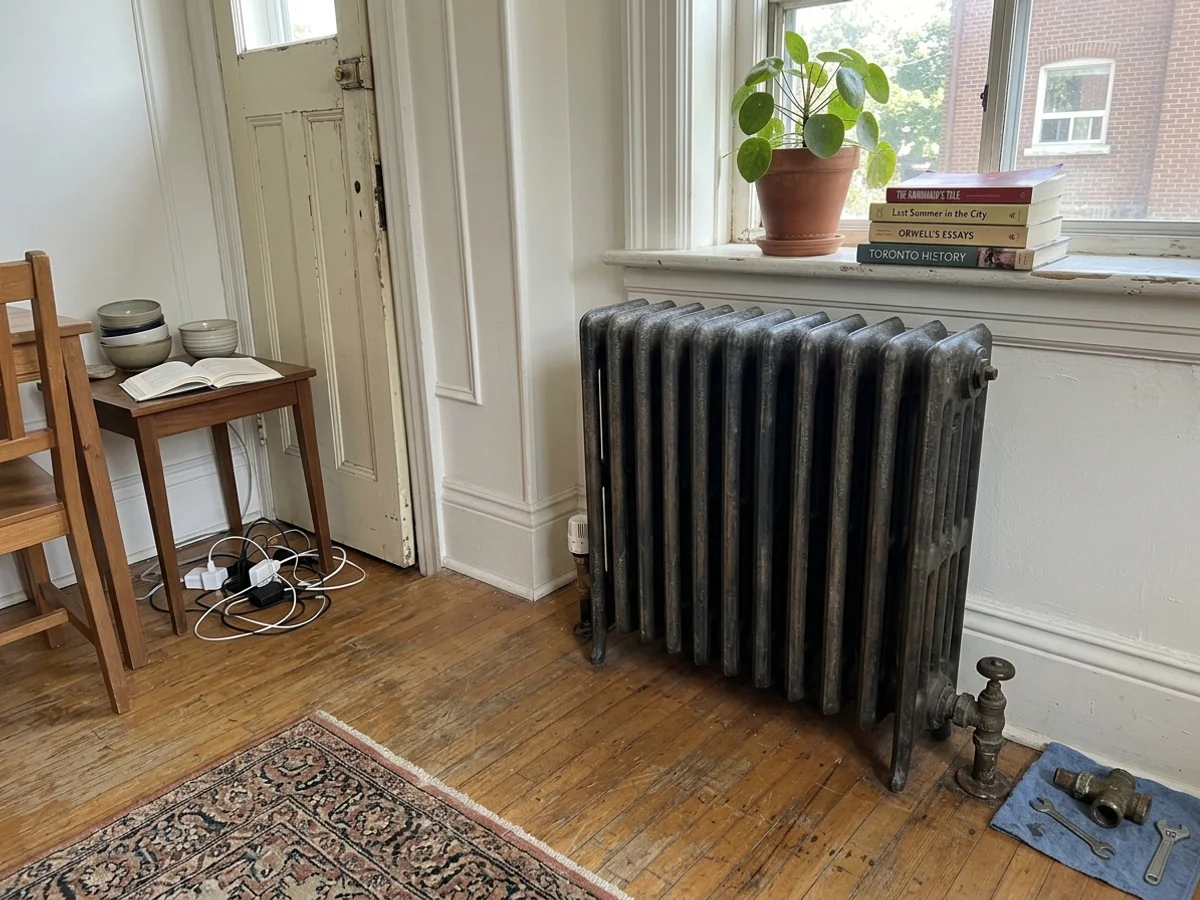
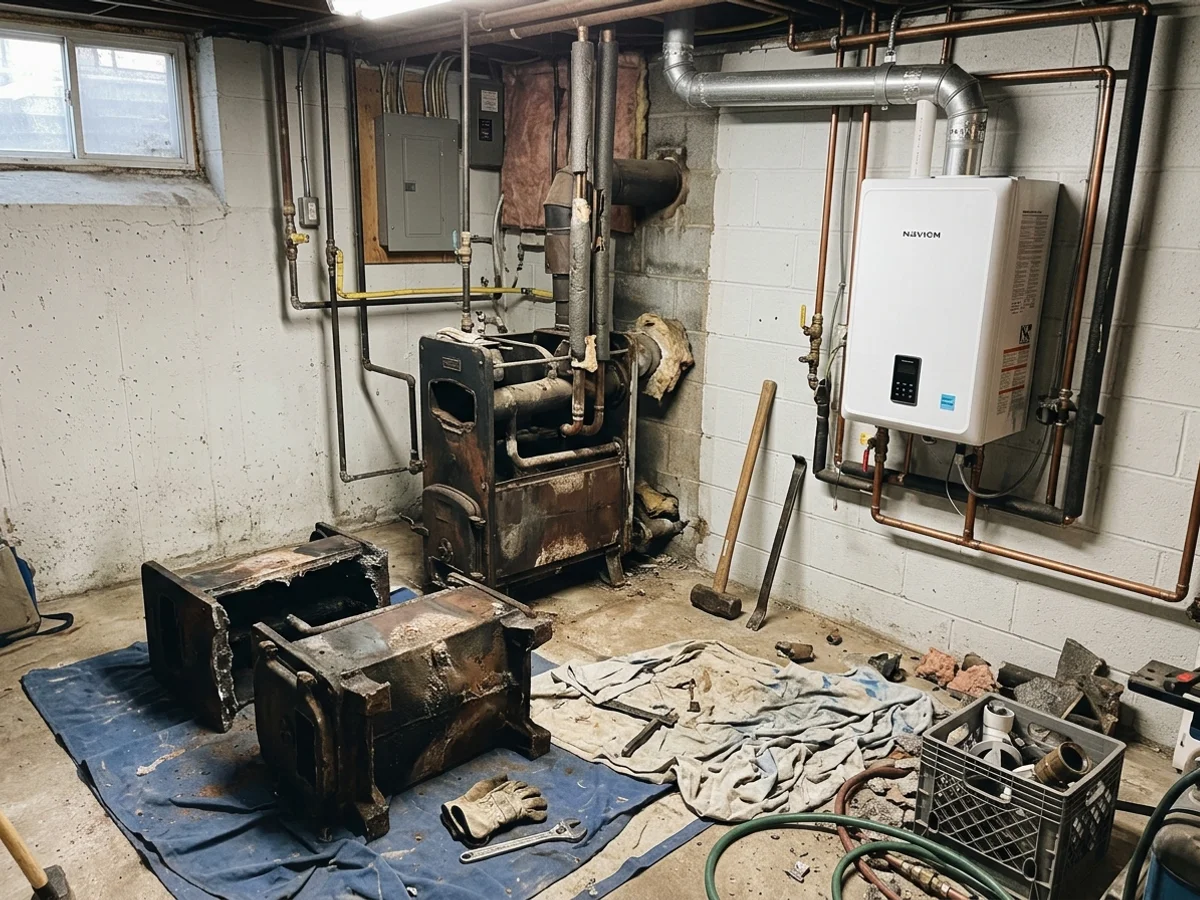
Boiler replacement in Toronto is the full swap of a 15 to 40 year old gas or oil boiler, and for older homes with original cast iron distribution it runs $8,500 to $14,500 CAD. Newer GTA hydronic and combi systems reaching end of life replace at $5,500 to $9,500 CAD. The word replacement understates what is involved. On a pre-1950 house the job includes breaking down and removing a cast iron sectional weighing several hundred kilograms, de-commissioning the masonry chimney for the boiler, running PVC direct venting, rebuilding the near-boiler piping, sizing the gas line in MBTU back to the meter, and adding the controls that let a condensing unit actually condense.
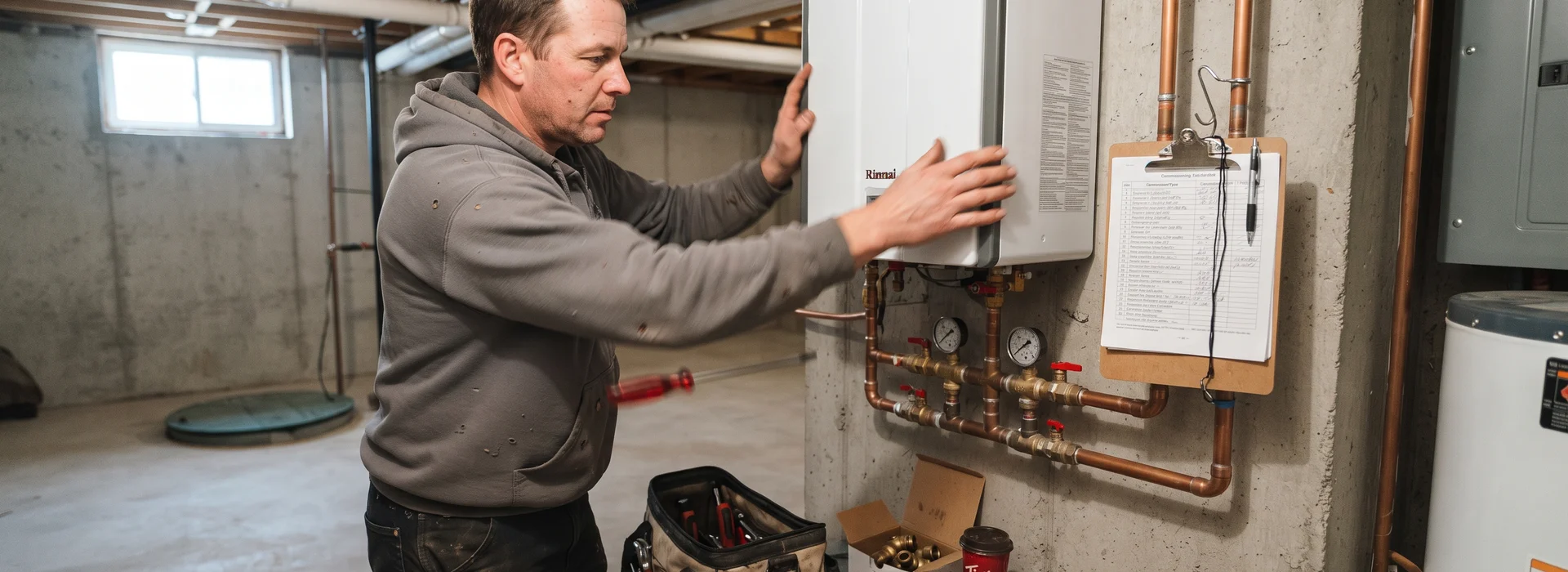
Every replacement starts with a written repair-versus-replace analysis. That comparison is not a sales formality. Roughly one call in five ends with us quoting the repair instead, because a unit under fifteen years old with a sound heat exchanger and a single failed component is usually worth fixing. Every technician on the job holds a valid TSSA G1 or G2 gas certification and the work is completed to Ontario B149, CSA B51, and Ontario Building Code Part 6 and Part 7, the same code path we follow on every boiler installation in Toronto.
5 Signs Your Boiler Needs Replacement, Not Repair
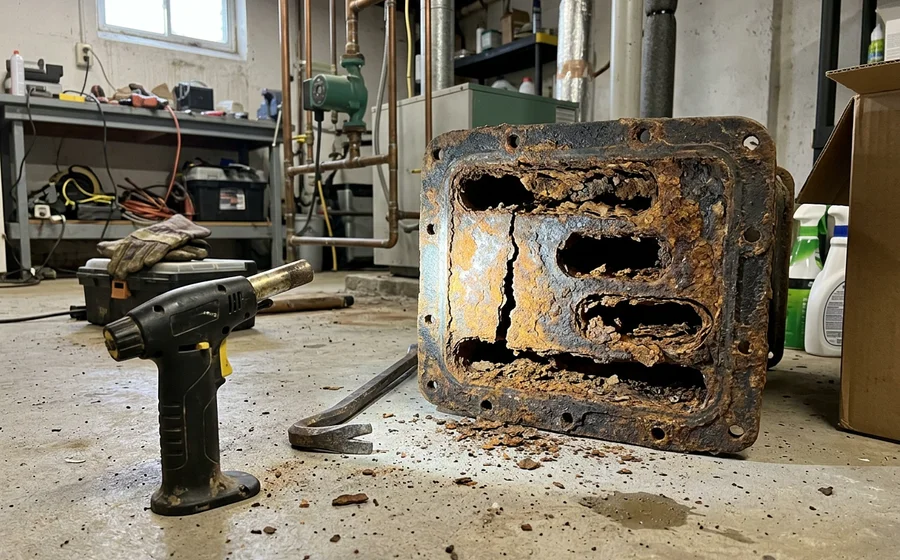
- Rust staining or standing water at the base of the unit. On a cast iron sectional this almost always means a cracked section. Sections can occasionally be replaced at $1,500 to $3,500 CAD, but on a 25 year old boiler you are spending major-repair money on a unit already past its efficient life.
- Pressure that needs topping up every few weeks. A healthy closed hydronic system holds pressure for years. Frequent top-ups mean a leak, and if it is not visible on the loop it is inside the boiler.
- Condensation in a flue that should be dry. A mid-efficiency boiler venting into masonry should keep its flue gases above the dew point all the way out. Moisture in that flue indicates a heat exchanger losing its ability to transfer heat.
- Gas bills climbing with no change in habits. Efficiency degrades gradually. A unit that was 80 percent at installation can be running in the mid-sixties by year 25, and the bill is the only symptom you see.
- A second major repair inside two years. Heat exchanger, gas valve, circuit board, cast iron sections. Any two of those on an older unit and the repair spend has started chasing the replacement cost.
7 Things Our TSSA Technicians Check Before Every Quote
Before any replacement is quoted, the diagnostic covers seven specific items, and every one of them can change the CAD figure.
- Combustion readings. CO, CO2 ratio, stack temperature, and excess air measured with a digital flue gas analyser to establish the unit’s real current efficiency, not its nameplate.
- Heat exchanger condition. Visual inspection for cracking, scaling, and corrosion on the fire side and the water side.
- System pressure history. How often it has needed topping up, and whether the expansion tank pre-charge is still correct.
- Distribution type and temperature. Cast iron radiators, hydronic baseboard, panel radiators, or radiant slab. This sets whether a mixing valve and return-water protection are required.
- Venting route. Whether PVC can be routed to a compliant side-wall or concentric termination given B149 clearances to windows, meters, and the property line.
- Gas line capacity. Load in MBTU back to the meter, checked against the input rating of the proposed replacement.
- Removal route. How the old unit physically leaves the building. On a Cabbagetown row house with no driveway this is agreed before install day, not improvised on it.
How Much Does Boiler Replacement Cost in Toronto?
| Scenario | What drives the price | CAD band |
|---|---|---|
| Newer sealed condensing or combi at end of life | Existing PVC vent reused, minimal piping change | $5,500 - $9,500 |
| Cast iron to condensing retrofit | Sectional removal, chimney de-commissioning, near-boiler rebuild | $8,500 - $11,500 |
| Complex retrofit, high radiator count | Gravity conversion, zoning, full balance and air elimination | $11,500 - $14,500 |
| Oil to gas conversion | Above plus oil tank and line decommissioning, new gas line | Quoted per site |
Enbridge Home Efficiency Rebate Plus offsets up to $6,500 CAD and the Canada Greener Homes Grant up to $5,000 CAD on qualifying 95%+ AFUE replacements, for a combined offset of up to $11,500 CAD. The Canada Greener Homes Loan adds up to $40,000 CAD at zero percent interest. Both rebate programs require the energy assessment to happen before the old boiler is removed, which is the single most common way Toronto homeowners lose the offset.
What Actually Stops Toronto Homeowners From Replacing an Aging Boiler
“It still works” is the most common reason a replacement gets deferred, and it is a fair point mechanically. A cast iron sectional can run for fifty years. The problem is that it stopped being efficient around year 25, and every heating season after that costs 25 to 35 percent more than it needs to. Deferring a $10,000 CAD replacement for five years on a house burning $2,400 CAD of gas a year can easily cost $3,000 to $4,000 CAD in wasted fuel, and it risks losing the rebate offset if the unit fails mid-winter and gets replaced as an emergency instead of a planned upgrade.
“The quote is huge” is the second. It is worth separating equipment from work. On a $10,300 CAD cast iron retrofit the boiler itself is often under half the total. The rest is removal, chimney de-commissioning, PVC venting, near-boiler piping, mixing valve, expansion tank, zone controls, permit, inspection, disposal, and rebate filing. Every one of those lines appears on the quote in Canadian dollars.
“I cannot tell if the technician is licensed” is the third and the easiest to resolve. Ontario requires TSSA G1 or G2 for gas boiler work. Ask for the certificate number and check that it appears on the invoice, and ask for the TSSA permit number on the completed job. We print both as standard.
How Our Toronto Boiler Replacement Process Works
Diagnostic and assessment first, covering the seven checks above. Written repair-versus-replace analysis handed over before any quote is discussed. Removal plan and quote, so the route the old unit takes out of the building and the fate of the chimney are settled in advance. TSSA permit pulled with the inspection booked at the same time, and installation scheduled inside 3 to 7 business days or 24 to 48 hours where the house has no heat. Removal and installation, with the old sectional broken down and carried out, the new boiler set, near-boiler piping rebuilt, combustion analysed, and the system purged and rebalanced. Inspection, disposal, and warranty, with the TSSA inspector met, the old unit scrap recycled, the warranty registered, the rebates filed, and the written workmanship warranty issued.
If the replacement is being driven by efficiency rather than failure, High-Efficiency Condensing Boiler Installation Toronto covers the 95%+ AFUE side in full. If you want to free the utility room at the same time, Combi Boiler Installation Toronto explains the tank conversion.