24/7 Cold Snap Emergency Response(647) 254-9788
Toronto Boiler Installation Space Saver

Combi Boiler Installation in Toronto: Space Heating Plus On-Demand Domestic Hot Water in One Wall-Mounted Unit Across the GTA

Compact wall-mounted combi boilers delivering uninterrupted heating and on-demand domestic hot water, sized by GPM for Toronto homes and fitted with descaling valves for GTA hard water.

Published band $4,500 - $8,500 CAD per installation (CAD)
  • TSSA G1/G2 Licensed
  • 22 Years Experience
  • Same-Day GTA Dispatch
  • Written Workmanship Warranty
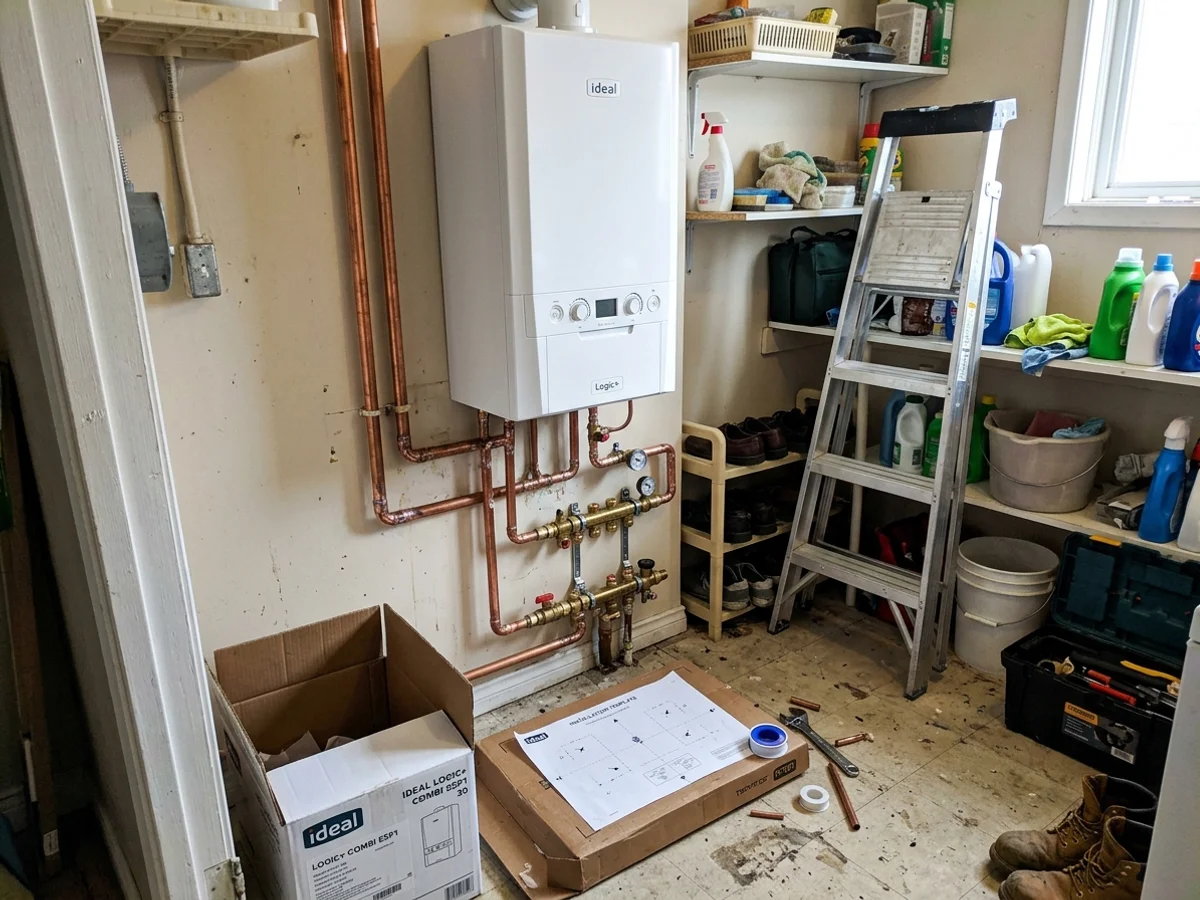
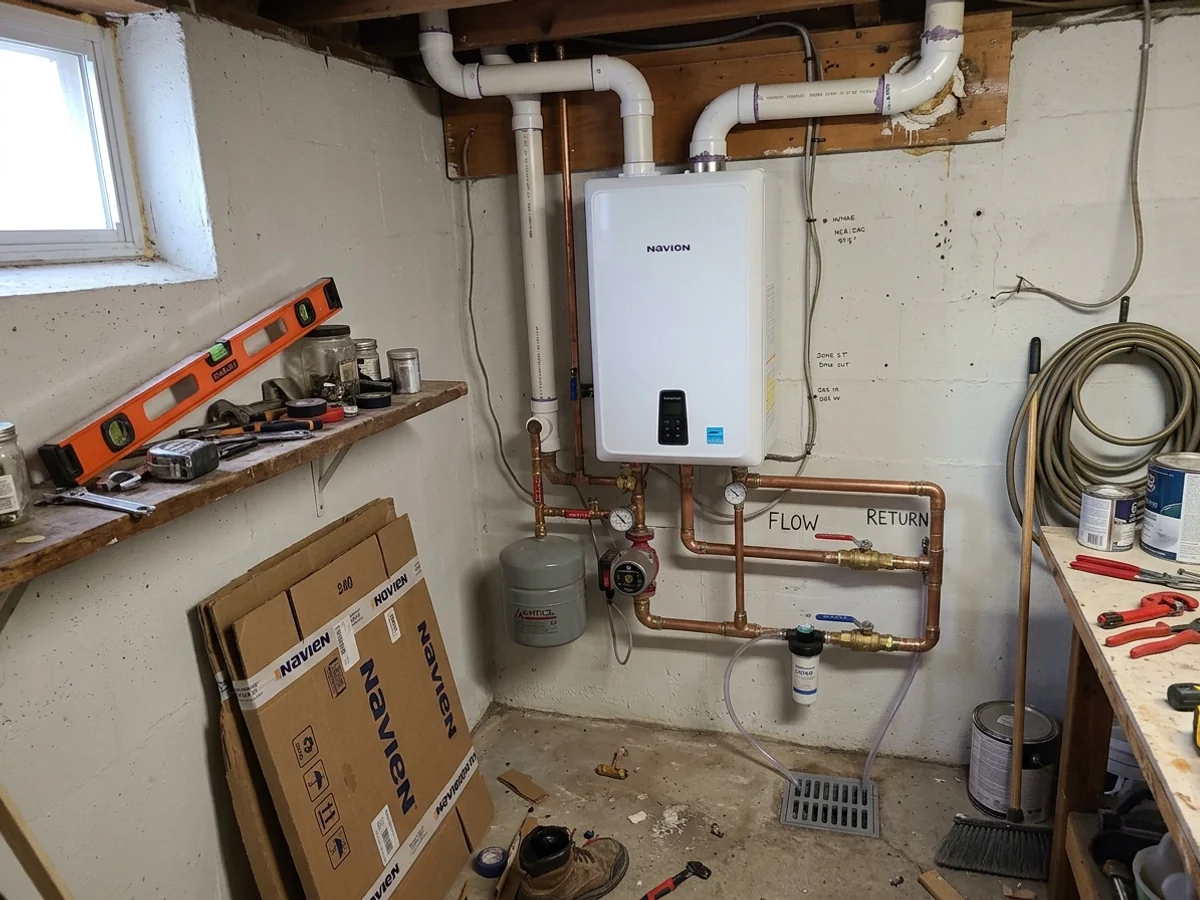
Wall-mounted combi boiler installed in a compact Toronto utility room with isolation valves and domestic hot water piping
  • 5-Star Customer Satisfaction
  • Same-Day GTA Emergency Dispatch
  • 22 Years of Boiler Installation Experience
  • Written Workmanship Warranty

What Is Combi Boiler Installation in Toronto?

Combi boiler installation in Toronto costs $4,500 to $8,500 CAD and replaces two appliances with one. A combination boiler produces space heating and domestic hot water from a single wall-mounted unit with no storage cylinder. When a hot tap opens anywhere in the house, a flow switch diverts the boiler’s output through a flat-plate heat exchanger and heats the water as it passes, which is why hot water is described as on-demand rather than stored.

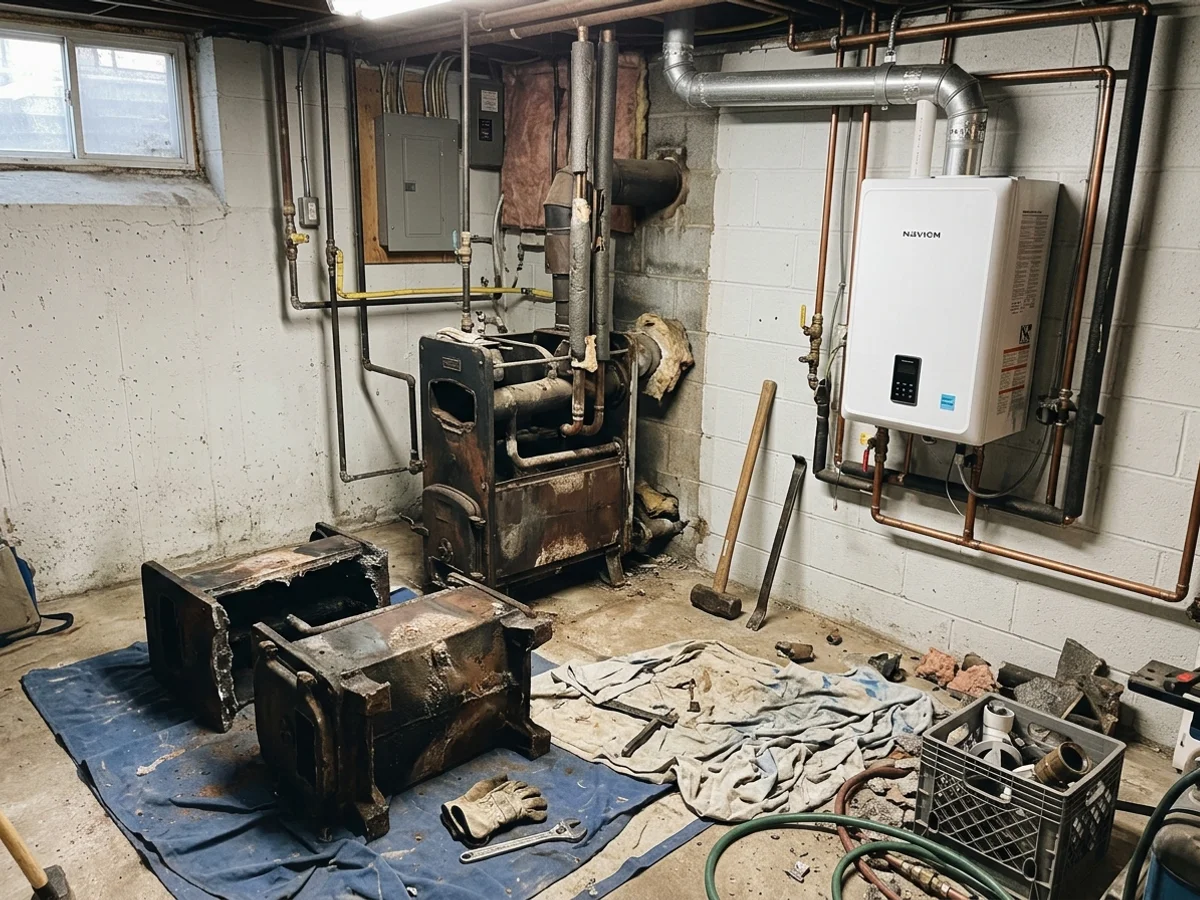
For the small utility rooms common in post-war Scarborough, Etobicoke, and North York housing, removing the tank is often worth as much as the efficiency gain. A 60 gallon cylinder occupies roughly nine square feet of floor and loses heat continuously whether anyone is using hot water or not. The trade-off is that heating and hot water now share one appliance, which makes correct sizing the whole game. Every unit we install is a TSSA-permitted installation completed to Ontario B149 fuel code, with the technician’s certificate number on the invoice, the same way we handle every boiler installation in Toronto and across the GTA.
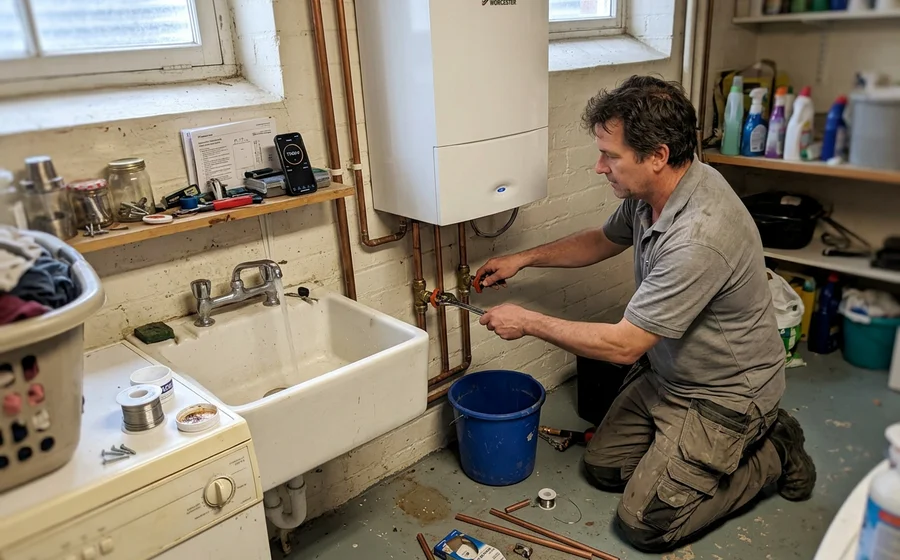
Technician fitting descaling flush isolation valves beneath a wall-mounted combi boiler in a Toronto basement

Combi vs Split System: 5 Factors for Toronto Homes

  1. Floor space. A combi removes the hot water cylinder entirely. In a Guildwood or Long Branch utility room that is often the deciding factor on its own.
  2. Peak simultaneous hot water demand. A combi heats water as it flows, so it has a ceiling measured in gallons per minute. A split system with an indirect tank has stored volume to draw on, which wins in a four-bathroom home where two showers can run at once.
  3. Existing gas line capacity. A combi has a higher peak input rating than a system boiler of equivalent heating output, because it must produce instant hot water. If the run back to the meter was sized for a lower-input appliance it needs resizing in BTU terms.
  4. Distribution type. High-temperature cast iron radiators and low-temperature radiant loops ask different things of the boiler. A combi feeding original radiators still needs a mixing valve and outdoor reset to condense properly, exactly as a high-efficiency condensing install does.
  5. Redundancy. With a combi, one failure takes out heating and hot water together. With a split system, a boiler fault still leaves the tank holding usable hot water for a day. For some households that matters, for most it does not.

How Much Does a Combi Boiler Cost in Toronto?

$4,500 to $8,500 CAD, published, never gated. The spread comes from what else has to change around the boiler.

ScopeWhat it includesCAD band
Like-for-like swapNew combi, existing vent reused, flush valves, purge and rebalance$4,500 - $6,000
Tank to combi conversionAbove plus tank removal, DHW manifold, gas line resize$6,000 - $7,500
High-demand with new ventingAbove plus higher GPM unit, new PVC vent run, outdoor reset$7,500 - $8,500

Across Vaughan, Brampton, and Mississauga where the housing stock is newer, most jobs land in the like-for-like or conversion band at $5,500 to $9,500 CAD. In older Toronto and Etobicoke homes the near-boiler piping more often needs rebuilding, which pushes toward the upper end. The diagnostic fee of $99 to $249 CAD is waived when you authorise the installation on the same visit.

Why GPM Sizing Decides Whether You Like Your Combi

This is the section most worth reading. A combi is rated in gallons per minute at a given temperature rise. Manufacturers quote GPM at a 45F rise because it produces a bigger number. Toronto incoming water in January sits around 40F to 45F, and a comfortable shower is about 105F to 110F. That is a 65F to 70F rise, and at 70F rise the same unit delivers roughly two thirds of its headline figure.

A single shower uses about 2.0 to 2.5 GPM with a modern head. Add a kitchen tap or a second shower and you are at 4.0 to 5.0 GPM. A combi rated 5.5 GPM at 45F rise delivers closer to 3.6 GPM at 70F rise, which is why so many GTA homeowners find their combi “goes cold when someone else turns on a tap”. Nothing is broken. It was sized from the wrong column of the spec sheet.

We measure fixture count and peak simultaneous draw at the assessment and size from the 70F rise figure. It is the single most common inherited fault we correct on Brampton and Vaughan subdivision homes where whole streets received the same undersized unit.

Hard Water, Scale and the Flat-Plate Exchanger

GTA water is hard, and the flat-plate heat exchanger inside a combi is the most scale-sensitive component in the house. Its passages are narrow by design, because narrow passages transfer heat efficiently. That same geometry is where calcium deposits first. As the plates fur up, flow drops, the unit modulates harder to compensate, and the symptom the homeowner notices is that hot water pressure has faded over two or three winters.

The fix is a descaling flush, not a new boiler. That is why we fit descaling flush isolation valves on every combi installation as standard. They add little to the install cost and turn descaling into a routine part of the annual 12-point service at $199 to $349 CAD. A combi installed without flush valves in GTA water is a combi with a shortened life, and it is one of the few genuinely avoidable failures in residential hydronics.

What Actually Stops Toronto Homeowners From Switching to Combi

“A tank system has worked for decades, why change it” is the most common hesitation. It has less to do with the tank failing and more with what a combi frees up: the cylinder itself, roughly nine square feet of floor space, plus the standby heat loss from keeping a tank of water hot around the clock whether anyone uses it or not.

“I have heard combis run out of hot water when someone else turns on a tap” is the second, and it is usually a sizing problem rather than a design flaw. Combis are rated at a 45F temperature rise, but Toronto incoming water in January sits closer to 40F to 45F, which means a comfortable shower needs a 65F to 70F rise, roughly two thirds of the headline GPM figure. We size from the 70F rise number and the actual fixture count rather than the manufacturer’s best-case rating, which is the step that gets skipped on the undersized combis we replace across Brampton and Vaughan subdivisions.

“The quote for a tank conversion feels like a lot for swapping one appliance” is the third. A tank to combi conversion is $6,000 to $7,500 CAD because it includes removing and disposing of the cylinder, rebuilding the domestic hot water manifold, and often resizing the gas line for the combi’s higher input rating. Priced as separate jobs those line items would not come in cheaper.

How Our Toronto Combi Installation Process Works

Demand survey first: fixture count, bathroom count, and peak simultaneous draw, so the domestic hot water side is sized from real numbers. Manual J heat load in parallel for the space heating side, because the unit has to satisfy both. Written CAD quote covering the swap, conversion, and high-demand options with parts, labour, permits, and disposal itemised. TSSA permit pulled and gas line sizing confirmed for the input rating, with installation scheduled inside 3 to 7 business days or 24 to 48 hours on a no-heat emergency. Installation and commissioning with the combi mounted, flush valves fitted, thermostatic mixing valve set, combustion analysed with a digital flue gas analyser, and the heating loop purged and rebalanced. Handover with flow rates verified at the taps themselves, warranty registered, rebate paperwork filed where the unit qualifies, and the written workmanship warranty issued.

If your current unit has simply reached the end of its service life rather than being the wrong size, Boiler Replacement Toronto covers the end-of-life decision. If hot water flow is the only complaint, start with the annual service above and let a descaling flush prove the case before spending on equipment.
Transparent CAD Pricing

How Much Does Combi Boiler Cost in Toronto?

Published on the page, never gated. Every quote itemises parts, labour, TSSA permits, and disposal in Canadian dollars before any work starts.

Like-for-Like Combi Swap

$4,500 - $6,000 CAD

  • Wall-mounted combi sized to simultaneous GPM demand
  • Existing PVC vent run reused where diameter allows
  • Descaling flush isolation valves fitted
  • System purge and rebalance after the swap
Get This Quoted
Most Requested

Tank to Combi Conversion

$6,000 - $7,500 CAD

  • Everything in the like-for-like swap
  • Hot water tank removal and disposal
  • Domestic hot water manifold and mixing valve
  • Gas line resizing for the higher input rating
Get This Quoted

High-Demand Combi With New Venting

$7,500 - $8,500 CAD

  • Everything in the tank conversion
  • New PVC concentric or side-wall direct venting
  • Higher GPM unit for multi-bathroom homes
  • Outdoor reset control and zone valve upgrade
Get This Quoted

Combi sizing is driven by simultaneous GPM demand, not by floor area. Undersizing is the most common inherited fault we correct. Enbridge and Canada Greener Homes rebates apply where the unit meets the 95%+ AFUE threshold.

Ontario Rebate Fast Filing

Save Up to $11,500 CAD

As an ENERGY STAR certified installer we process your utility and federal grant paperwork directly, so the offset lands on your quote instead of on your to-do list.

Up to $6,500 CAD

Enbridge Home Efficiency Rebate Plus

Qualifying 95%+ AFUE installations paired with insulation upgrades.

Up to $5,000 CAD

Canada Greener Homes Grant

Federal grant on qualifying high-efficiency heating equipment.

Up to $40,000 CAD

Canada Greener Homes Loan

Interest-free financing at 0% over 10 years.

Free Tool

Try Our Free Boiler Sizing Calculator

Estimate the heating capacity your Toronto home needs before booking a Manual J site assessment.

Use the Calculator
Why Choose Us

Why Choose Us for Combi Boiler

22 Years of Boiler Installation Experience

Two decades of combi retrofits, tank conversions, and hydronic design across Toronto, Vaughan, Mississauga, Brampton and the wider GTA.

Sized by GPM, Not by Floor Area

We measure peak simultaneous draw before quoting. An undersized combi is the single most common inherited problem in GTA homes.

Descaling Valves Fitted as Standard

GTA water is hard. Flush isolation valves let the flat-plate exchanger be descaled at the annual service instead of replaced early.

TSSA G1/G2 Licensed Technicians Only

Gas line resizing and venting completed to Ontario B149 fuel code with the certificate number printed on your invoice.

Frees Up Floor Space

A tank to combi conversion removes the separate hot water cylinder, which matters in the small utility rooms of post-war GTA housing.

Published CAD Pricing

$4,500 to $8,500 CAD published on the page. Diagnostic waived when you authorise the installation on the same visit.

The Framework

How Our Combi Boiler Process Works

  1. 1

    Demand survey

    Fixture count, bathroom count, and peak simultaneous draw measured so the combi is sized to real GPM demand rather than square footage.

  2. 2

    Heat load and GPM sizing

    Manual J heat load for the space heating side, paired with the domestic hot water flow requirement at a 70F temperature rise.

  3. 3

    Written CAD quote

    Swap, tank conversion, and high-demand options priced in Canadian dollars with parts, labour, permits, and disposal itemised.

  4. 4

    Permit and scheduling

    TSSA permit pulled, gas line sizing confirmed for the input rating, and install scheduled within 3 to 7 business days.

  5. 5

    Installation and commissioning

    Combi mounted, descaling flush valves fitted, mixing valve set, combustion analysed, and the heating loop purged and rebalanced.

  6. 6

    Handover and rebate filing

    Flow rates verified at the taps, warranty registered, rebate paperwork filed where the unit qualifies, written workmanship warranty issued.

Want a written CAD quote for combi boiler?

Published pricing bands, TSSA-licensed technicians, and the diagnostic waived on same-visit authorisation.

Our Work

Combi Boiler Work Across Toronto and the GTA

Click any image to enlarge.

Customer Feedback

What Customers Say About Our Combi Boiler Work

Our old combi could not run a shower and the heating at the same time. They measured the actual draw, moved us up a size, and the difference is night and day. $6,400 CAD including removing the old tank.

Bernadette O.

Leslieville

5-Star Customer Satisfaction

Getting rid of the hot water tank gave us back most of the utility room. The combi went in cleanly with flush valves so it can be descaled each year. $7,200 CAD.

Kyle R.

Mimico

Top-Rated Contractor

Hot water flow had been dropping for two winters. They descaled first to prove the exchanger was past saving, then quoted the replacement at $5,900 CAD. No pressure either way.

Anika D.

Streetsville

Trusted by Homeowners and Businesses

Got Questions?

Combi Boiler FAQs

How much does a combi boiler installation cost in Toronto?

A combi boiler installation in Toronto runs $4,500 to $8,500 CAD. A like-for-like swap where the existing PVC vent can be reused sits at $4,500 to $6,000 CAD. A tank to combi conversion, which includes removing and disposing of the hot water cylinder and resizing the gas line for the higher input rating, runs $6,000 to $7,500 CAD. A high-demand unit for a multi-bathroom home with new venting runs $7,500 to $8,500 CAD. Where the combi meets the 95%+ AFUE threshold, Enbridge and Canada Greener Homes rebates apply and we file the paperwork.

What is a combi boiler and how does it differ from a system boiler?

A combi, short for combination, produces space heating and domestic hot water from a single wall-mounted appliance with no storage tank. When a hot tap opens, a flow switch diverts the boiler output through a flat-plate heat exchanger and heats the water on demand. A system boiler by contrast heats only the hydronic loop and relies on a separate cylinder or indirect tank for hot water. The combi advantage is floor space and no standby losses from a stored tank. The trade-off is that heating and hot water share one unit, so sizing has to account for both running at once.

How do you size a combi boiler correctly?

By simultaneous demand in gallons per minute, not by the square footage of the house. We count fixtures, note the bathroom count, and calculate peak simultaneous draw at a 70F temperature rise, which is the realistic winter condition for Toronto incoming water. That number sets the domestic hot water side. A separate Manual J heat load sets the space heating side. The unit has to satisfy both. A two bathroom home where someone showers while the dishwasher runs needs materially more capacity than the floor area alone would suggest, and getting that wrong is the reason so many GTA homeowners describe their combi as weak.

Why is my combi losing hot water flow?

Almost always scale on the flat-plate heat exchanger. Water across the GTA is hard, and the thin plates inside a combi exchanger are exactly where calcium deposits accumulate. As the passages narrow, flow drops and the unit struggles to hit its rated GPM. A descaling flush at $199 to $349 CAD often restores it completely. If flow does not recover after a proper flush, the exchanger is fouled past saving and replacement is the honest answer. We always flush first and prove the case before quoting new equipment.

What are descaling flush valves and why fit them?

They are a pair of isolation valves with service ports fitted on the domestic hot water side of the combi. They let a technician connect a pump and circulate descaling solution through the flat-plate exchanger without draining the system or removing the unit. Fitting them costs very little during installation and turns what would be an awkward job into a routine part of the annual service. Every combi we install gets them as standard, because in GTA water a combi without flush valves is a combi with a shortened life.

Can a combi handle a house with two or three bathrooms?

Yes, with correct sizing. High-demand combi units are available that deliver enough GPM for simultaneous showers, and we specify those for multi-bathroom homes. Where peak demand is genuinely high, for example a large Oakville or Richmond Hill home with four or more bathrooms, the better answer is often a system boiler with an indirect tank on a priority zone rather than pushing a combi past its comfortable range. We put both options in the quote with the CAD figures side by side.

Combi versus split system: which suits a Toronto home?

Five factors decide it. Available floor space, since a combi removes the tank. Peak simultaneous hot water demand, where a split system with an indirect tank wins on high demand. Existing gas line capacity, because a combi has a higher input rating and may need the line resized. Distribution type, since high-temperature cast iron radiators pair differently than low-temperature radiant. And redundancy, because with a combi a single failure takes out both heating and hot water. For a typical two to three bathroom Toronto semi or detached home, a properly sized combi is the stronger choice. For larger homes with heavy simultaneous demand, a split system usually is.

Do I need a bigger gas line for a combi?

Sometimes. A combi has a higher peak input rating than a system boiler of the same heating capacity, because it has to produce instant hot water. If the existing line was sized for a lower-input appliance, the run is resized in BTU terms back to the meter. That is confirmed at the site assessment and priced into the quote rather than raised as an extra afterwards.

Which combi brands do you install?

Navien, Rinnai, Bosch, and Viessmann are the units we fit most often, and we are also manufacturer certified for Weil-McLain, Buderus, IBC, NTI, and Lochinvar. The recommendation follows the GPM requirement, the heat load, and the vent route rather than a house preference. Parts come from Ontario distributors so the manufacturer warranty stays valid.

How long does a combi installation take?

A like-for-like swap is one working day. A tank to combi conversion usually runs one to one and a half days because the cylinder has to come out, the domestic hot water manifold is rebuilt, and the gas line may need resizing. Scheduling is typically 3 to 7 business days after quote approval, or 24 to 48 hours if the house currently has no heat or no hot water.

How often should a combi be serviced?

Once a year, before the heating season. On a combi the annual service matters more than on a system boiler because of the descaling. The 12-point tune-up at $199 to $349 CAD covers digital combustion analysis, flat-plate exchanger descaling through the flush valves, mixing valve setpoint check, expansion tank pre-charge, and a 30 PSI pressure relief valve test. Annual service is also a condition of most manufacturer warranties.

What warranty comes with a new combi?

A written workmanship warranty on our labour plus the manufacturer warranty on parts. We register the unit at commissioning and use Ontario distributor parts, which are the two things most often missing when a manufacturer declines a warranty claim later.

Still have a question about your boiler?

Talk to a TSSA-licensed technician. Same-day GTA dispatch, 4-hour cold-snap response.

Same-Day Emergency Dispatch, 24/7 Cold Snap Response

Ready to Book Combi Boiler in Toronto?

Every combi boiler quote itemises parts, labour, TSSA permits, and disposal in Canadian dollars before any work starts.

  • Written workmanship warranty
  • Published CAD pricing, no quote gating
  • TSSA G1/G2 licensed technicians